
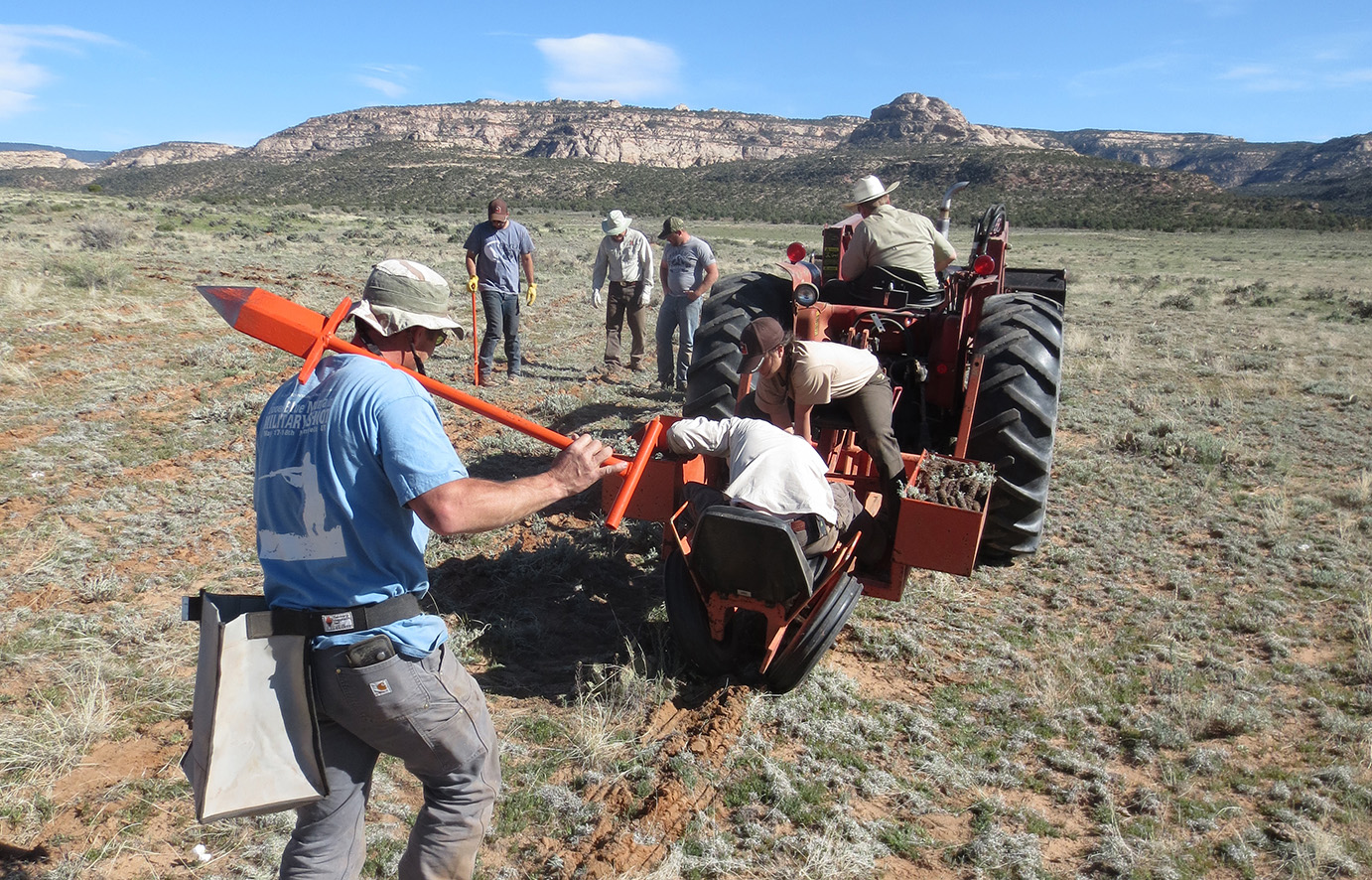
 SFW is working to reverse a downward trend in mule deer numbers on Utah’s San Juan unit. More than just volunteers who worked at a recent habitat restoration project, SFW has provided 97% of the funding that will ensure success of the critical Beef Basin/Dark Canyon Habitat Restoration Project. In total, SFW provided more than $228,164 to the important project. The Beef Basin/Dark Canyon project has been deemed “critical for mule deer winter survival” by big game and habitat biologists and by SFW members who know the habits and condition of the wildlife on this unit.
The Problem: SFW members who hunt deer on the San Juan unit of Southeastern Utah are concerned that mule deer numbers there are on the decline. In fact, according to SFW members most familiar with that herd, deer numbers have been trending down for several years. DWR Biologist Guy Wallace agrees. “I remember seeing hundreds and hundreds of deer wintering here in the lowlands,” Wallace said as he stood on barren ground in Beef Basin north of the San Juan Mountains. “But ten years ago when deer numbers were quite high, the deer and cattle began to take a toll on this winter range. And it’s had a really tough time making a comeback.” One glance at the Beef Basin portion of this range makes it clear the San Juan deer wintering ground needs help. Compacted earth and an altogether lack of browse are more than evident, and it’s obvious that large numbers of deer could not winter well there. Fewer deer are wintering in Beef Basin because there is no forage to support them. Sagebrush, one of the most valuable of winter food sources for deer, is particularly almost non-existent. 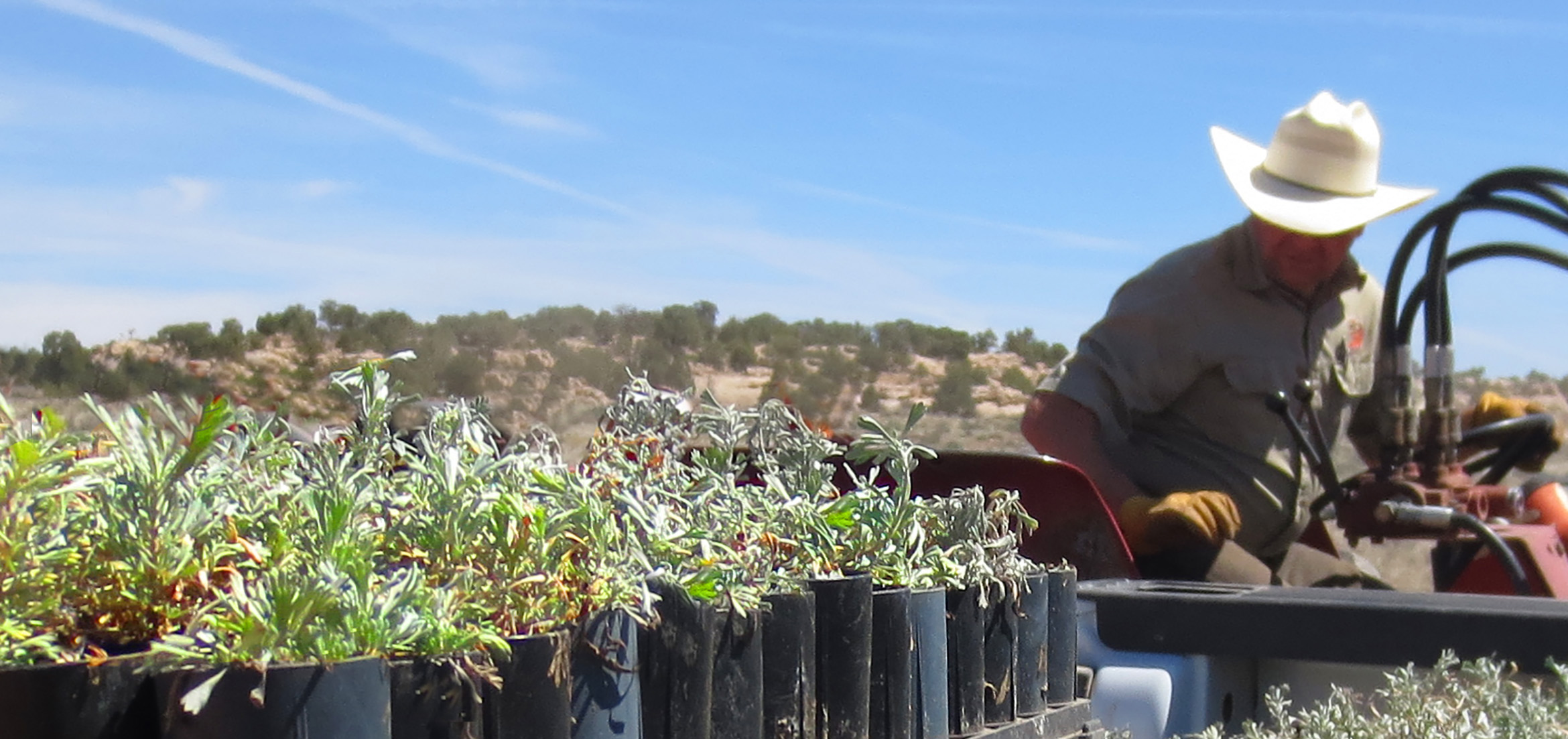 The Solution: DWR and BLM biologists have been exploring ways to reverse the problem in Beef Basin. In three of the past five years, the DWR has expended considerable resources purchasing and spreading sagebrush seed over large tracts of land. But inconsistent funding from the Utah Legislature has limited the success of these efforts. Beef Basin habitat restoration then found its way onto a list of nearly 200 other habitat projects of varying size and scope being considered for funding by a joint committee made up of DWR, Bureau of Land Management and US Forest Service officials. The full list of projects with accompanying budget requirements was given to SFW for consideration for Conservation Permit funding. The annual Habitat Project Funding meeting held in early April is where the project began to see promise from SFW leadership. SFW committed over $1 million to various habitat projects during the meeting, the greatest single amount going to fund nearly the entire Beef Basin restoration. By the end of the meeting, SFW allocated more than $140,000 to the Beef Basin project alone., plus an additional $87,000 to fund a project in neighboring Dark Canyon. “The only way to fix the San Juan deer herd is to fix the winter habitat in Beef Basin,” said Byron Bateman, President of SFW. “A lot of SFW members enjoy all of the diverse wildlife found on the San Juan unit, and our membership is very proud to fully fund this important mule deer habitat project.” 11,000 Seedlings: SFW has not only provided the funding for the Beef Basin project, it also provided volunteers in Phase 1 of the big job. SFW Blanding Chapter Chairman Truitt Purcell and SFW Committee Member Travis Pehrson led a group of volunteers working alongside DWR and BLM biologists and others in the planting of sagebrush seedlings. The three-day effort occurred over the early days of May and involved planting, by hand and by tractor, 11,000 sagebrush seedlings. Phase 2 and Phase 3 of the project include additional sagebrush seed to be flown over the area as well as additional site visits and plantings throughout the late fall this year. “I’d really like to see the mule deer on this unit come back, and I am confident now that it will happen,” Wallace added. “We are grateful to SFW for the funding and volunteer support out here.” SFW enjoys a strong, supportive relationship with the DWR and other state and federal wildlife and land agencies. These large-scale habitat restoration projects would not be possible without common goals, joint efforts and selfless partnerships. SFW would also like to thank BLM Wildlife Biologist Mandy Scott of Monticello, Utah and DWR Habitat Manager Daniel Eddington of Price, Utah, for their planning and oversight on the Beef Basin project. Mandy and Daniel and their support crew were seen energetically hand planting, loading seedlings, riding dust on the tractor, watering the plants and generally doing whatever was needed for the benefit of mule deer. Mandy, Daniel and their team will continue overseeing the project through this fall and beyond. The Future: The carrying capacity of Beef Basin and surrounding winter range must be improved if it is to support greater numbers of mule deer in the coming decades. SFW, BLM and the DWR are optimistic the Beef Basin/Dark Canyon Habitat Restoration Project will help reverse the downward trend in mule deer numbers there. Time, vigilance and additional investments by SFW and other conservation groups and state and federal agencies will be required. Year-round observation of the mule deer herd and annual analysis of the winter range conditions in Beef Basin will be an important component to measuring the success of the project over the next five and ten years. SFW will be there to help make it happen.

