Archives: Featured
Bighorns Back on Goslin Mountain
 Dutch John, Utah – SFW is putting bighorn sheep back on Goslin Mountain. A small herd of 23 Rocky Mountain bighorn sheep were released at Dripping Springs near Little Hole on the Green River. The herd includes 13 ewes, five lambs and five rams.
SFW volunteers worked with Utah Division of Wildlife (DWR) biologists and others to capture the bighorns in Desolation Canyon near Green River, Utah. The sheep were then moved to begin a new herd on Goslin Mountain. Dripping Springs is at the base of Goslin Mountain, between Dutch John and Little Hole in northeastern Utah.
“SFW is very committed to Utah’s bighorn sheep program and has committed over $150,000 to similar projects in the past three years,” sad Josh Horrocks, SFW Uintah Basin Chapter Chair. “We get pretty excited about the opportunity to participate in the capture and release of these animals where they can thrive and expand.”
This project marks the second time a herd has been reintroduced into the area.
About 40 years ago, biologists with the DWR, the U.S. Forest Service (USFS) and the Bureau of Land Management (BLM) began enhancing range along the Goslin Mountain/Green River corridor so Rocky Mountain bighorn sheep could be reintroduced to the area.
In 2001, the range enhancement was given a big boon when a fire near Dutch John cleared away large expanses of pinyon-juniper trees. Following the fire, the UDWR and the USFS were able to reseed much of the burned areas in preparation for the bighorn sheep reintroduction.
The first attempt to start a herd on Goslin Mountain began in December 2004. The new herd was supplemented in January 2007 with bighorns captured in Montana.
Unfortunately, after a quick growth spurt between 2005 and 2007, recruitment leveled off, and then the herd started to lose numbers.
In early 2014 DWR biologists hired helicopter crews to capture animals from the herds near the Green River in Desolation/Greys canyons. After capture crews brought the sheep out of the canyons, biologists gave the bighorns health checks and fitted them with ear tags. Some of the sheep were also fitted with tracking collars before being loaded onto modified horse trailers for their trip north.
“It’s good to see bighorns on the mountain again,” Dax Mangus, a UDWR biologist in northeastern Utah, said as the captured bighorns were released. “Hopefully, the capture team can catch a few more to bring up later this week.”
Dan Abeyta, a USFS biologist, agreed. “I’ve got my fingers crossed that these [sheep] will do better than the previous herd.”
DWR Names SFW-Uintah Basin Chapter “Partner Organization of the Year”
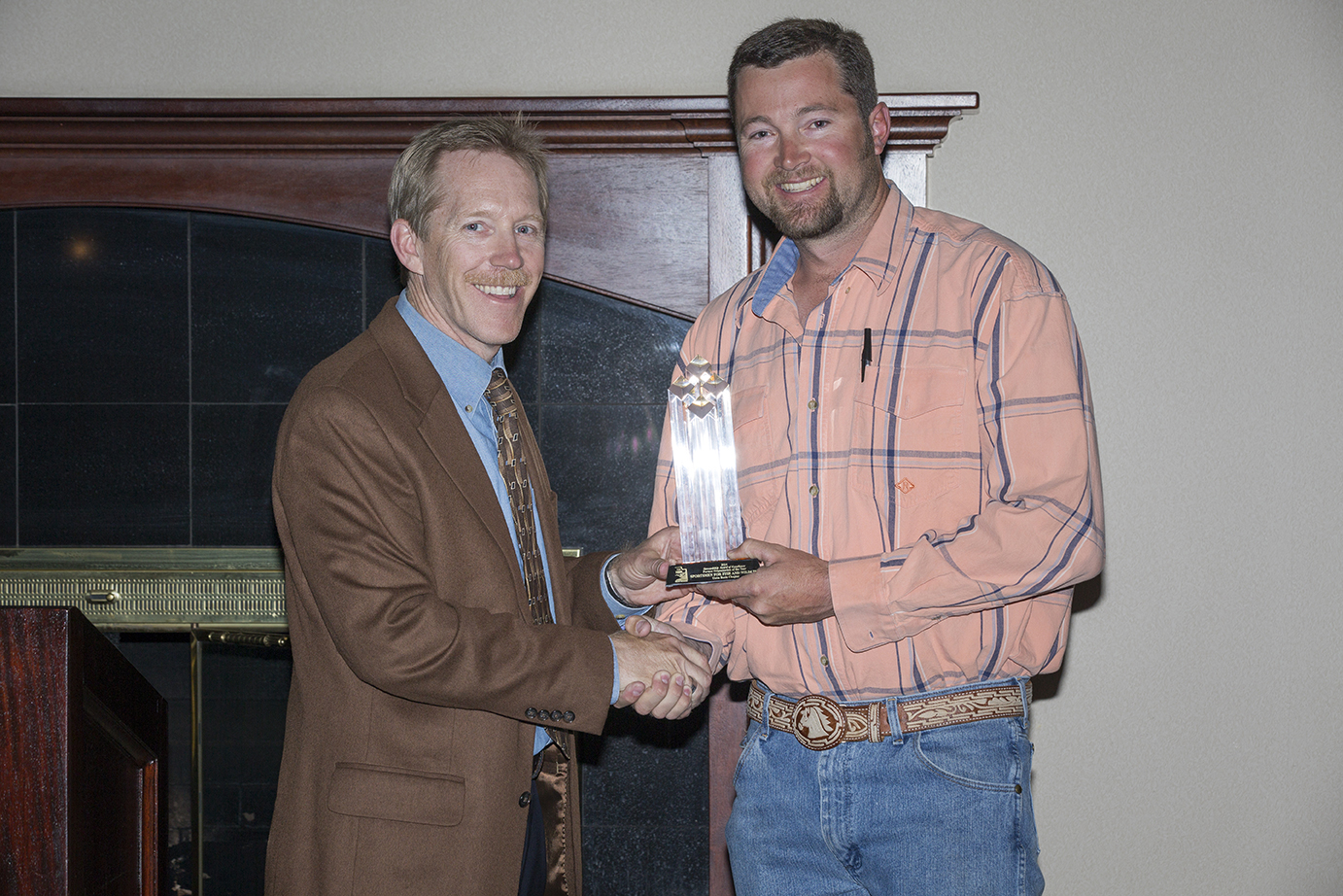 The Uintah Basin chapter of SFW has been an exceptional partner, going above and beyond to recruit and retain hunters, generate good will among sportsmen, and generously raise money for conservation and their worthy causes.
Uintah Basin SFW representative Josh Horrocks and others, worked tirelessly to secure funding for releasing rooster pheasants for public hunters on WMA and Walk-In-Access properties in the Northeastern Region. Beside securing $30,000 to buy roosters to supplement the birds purchased by the DWR, Josh and other SFW volunteers transported and released birds at multiple sites in the region throughout the pheasant season.
SFW has also donated prizes such as sweatshirts, hats, and knives to the “Caught Being Good” program, developed by the DWR conservation officers to encourage and reward young hunters for their safe, ethical, and responsible behavior and deference toward game rules and
regulations.
Josh Horrocks and his wife were in attendance to receive the DWR award and both he and DWR shared comments about the positive things that the DWR and SFW are working together on.
DWR Director Greg Sheehan added, “Thanks for everything SFW has done and continues to do while making wildlife even better in Utah. We have had a great year with all the SFW chapters, and they are all just as deserving of this award.”
SFW Puts $228,164 On the Ground on the San Juan
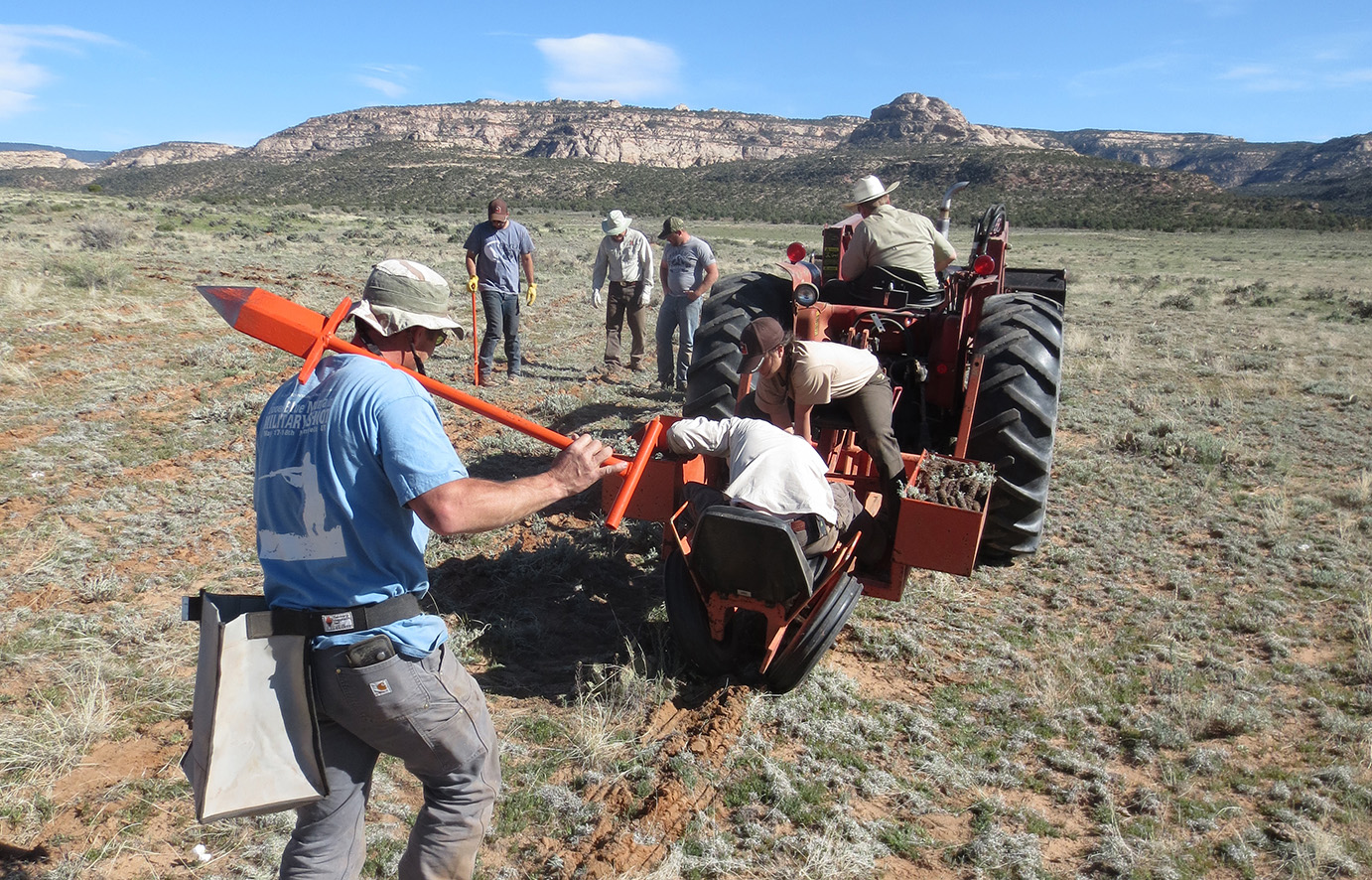 SFW is working to reverse a downward trend in mule deer numbers on Utah’s San Juan unit. More than just volunteers who worked at a recent habitat restoration project, SFW has provided 97% of the funding that will ensure success of the critical Beef Basin/Dark Canyon Habitat Restoration Project. In total, SFW provided more than $228,164 to the important project. The Beef Basin/Dark Canyon project has been deemed “critical for mule deer winter survival” by big game and habitat biologists and by SFW members who know the habits and condition of the wildlife on this unit.
The Problem: SFW members who hunt deer on the San Juan unit of Southeastern Utah are concerned that mule deer numbers there are on the decline. In fact, according to SFW members most familiar with that herd, deer numbers have been trending down for several years. DWR Biologist Guy Wallace agrees. “I remember seeing hundreds and hundreds of deer wintering here in the lowlands,” Wallace said as he stood on barren ground in Beef Basin north of the San Juan Mountains. “But ten years ago when deer numbers were quite high, the deer and cattle began to take a toll on this winter range. And it’s had a really tough time making a comeback.” One glance at the Beef Basin portion of this range makes it clear the San Juan deer wintering ground needs help. Compacted earth and an altogether lack of browse are more than evident, and it’s obvious that large numbers of deer could not winter well there. Fewer deer are wintering in Beef Basin because there is no forage to support them. Sagebrush, one of the most valuable of winter food sources for deer, is particularly almost non-existent. 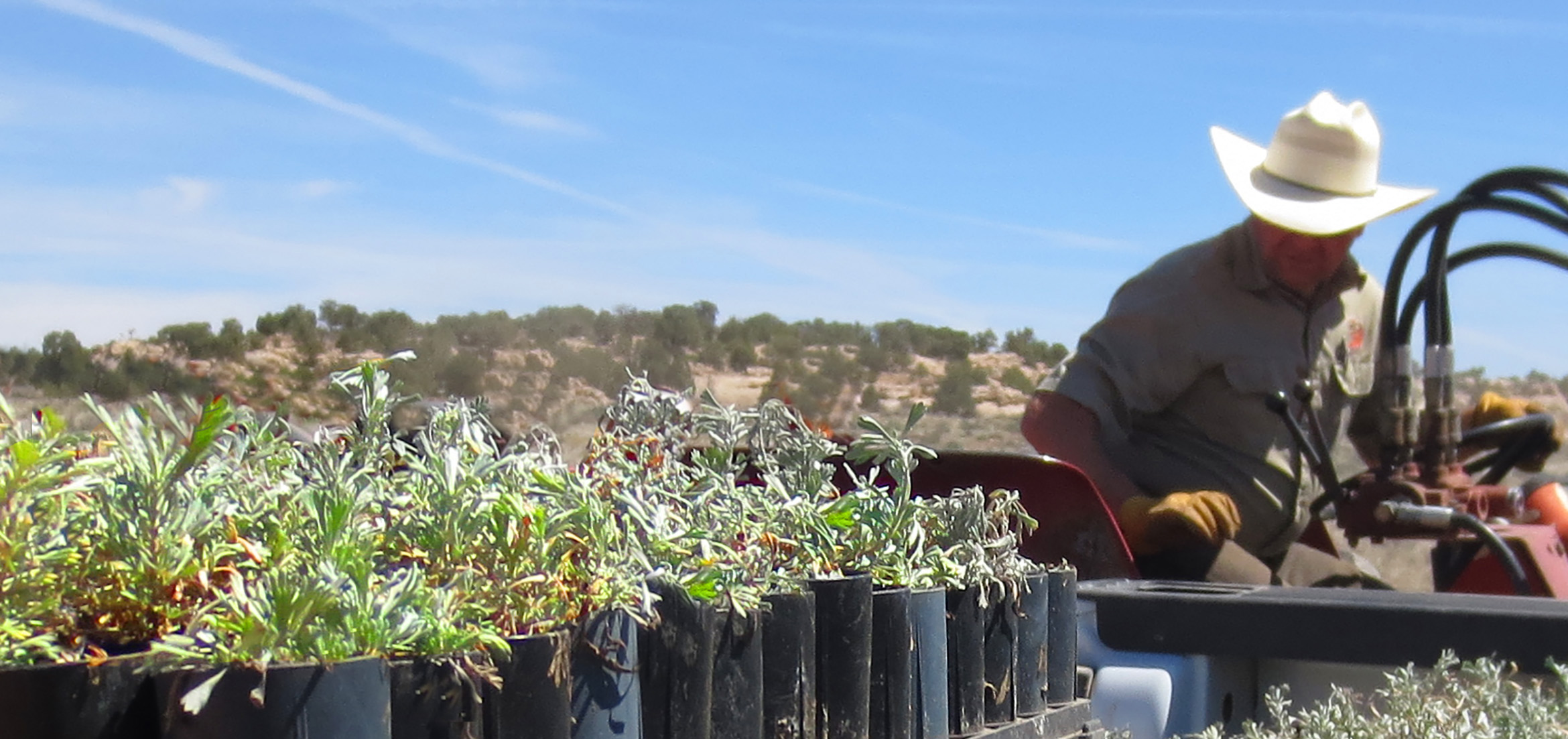 The Solution: DWR and BLM biologists have been exploring ways to reverse the problem in Beef Basin. In three of the past five years, the DWR has expended considerable resources purchasing and spreading sagebrush seed over large tracts of land. But inconsistent funding from the Utah Legislature has limited the success of these efforts. Beef Basin habitat restoration then found its way onto a list of nearly 200 other habitat projects of varying size and scope being considered for funding by a joint committee made up of DWR, Bureau of Land Management and US Forest Service officials. The full list of projects with accompanying budget requirements was given to SFW for consideration for Conservation Permit funding. The annual Habitat Project Funding meeting held in early April is where the project began to see promise from SFW leadership. SFW committed over $1 million to various habitat projects during the meeting, the greatest single amount going to fund nearly the entire Beef Basin restoration. By the end of the meeting, SFW allocated more than $140,000 to the Beef Basin project alone., plus an additional $87,000 to fund a project in neighboring Dark Canyon. “The only way to fix the San Juan deer herd is to fix the winter habitat in Beef Basin,” said Byron Bateman, President of SFW. “A lot of SFW members enjoy all of the diverse wildlife found on the San Juan unit, and our membership is very proud to fully fund this important mule deer habitat project.” 11,000 Seedlings: SFW has not only provided the funding for the Beef Basin project, it also provided volunteers in Phase 1 of the big job. SFW Blanding Chapter Chairman Truitt Purcell and SFW Committee Member Travis Pehrson led a group of volunteers working alongside DWR and BLM biologists and others in the planting of sagebrush seedlings. The three-day effort occurred over the early days of May and involved planting, by hand and by tractor, 11,000 sagebrush seedlings. Phase 2 and Phase 3 of the project include additional sagebrush seed to be flown over the area as well as additional site visits and plantings throughout the late fall this year. “I’d really like to see the mule deer on this unit come back, and I am confident now that it will happen,” Wallace added. “We are grateful to SFW for the funding and volunteer support out here.” SFW enjoys a strong, supportive relationship with the DWR and other state and federal wildlife and land agencies. These large-scale habitat restoration projects would not be possible without common goals, joint efforts and selfless partnerships. SFW would also like to thank BLM Wildlife Biologist Mandy Scott of Monticello, Utah and DWR Habitat Manager Daniel Eddington of Price, Utah, for their planning and oversight on the Beef Basin project. Mandy and Daniel and their support crew were seen energetically hand planting, loading seedlings, riding dust on the tractor, watering the plants and generally doing whatever was needed for the benefit of mule deer. Mandy, Daniel and their team will continue overseeing the project through this fall and beyond. The Future: The carrying capacity of Beef Basin and surrounding winter range must be improved if it is to support greater numbers of mule deer in the coming decades. SFW, BLM and the DWR are optimistic the Beef Basin/Dark Canyon Habitat Restoration Project will help reverse the downward trend in mule deer numbers there. Time, vigilance and additional investments by SFW and other conservation groups and state and federal agencies will be required. Year-round observation of the mule deer herd and annual analysis of the winter range conditions in Beef Basin will be an important component to measuring the success of the project over the next five and ten years. SFW will be there to help make it happen.
SFW Plants Bitterbrush on Parowan Front
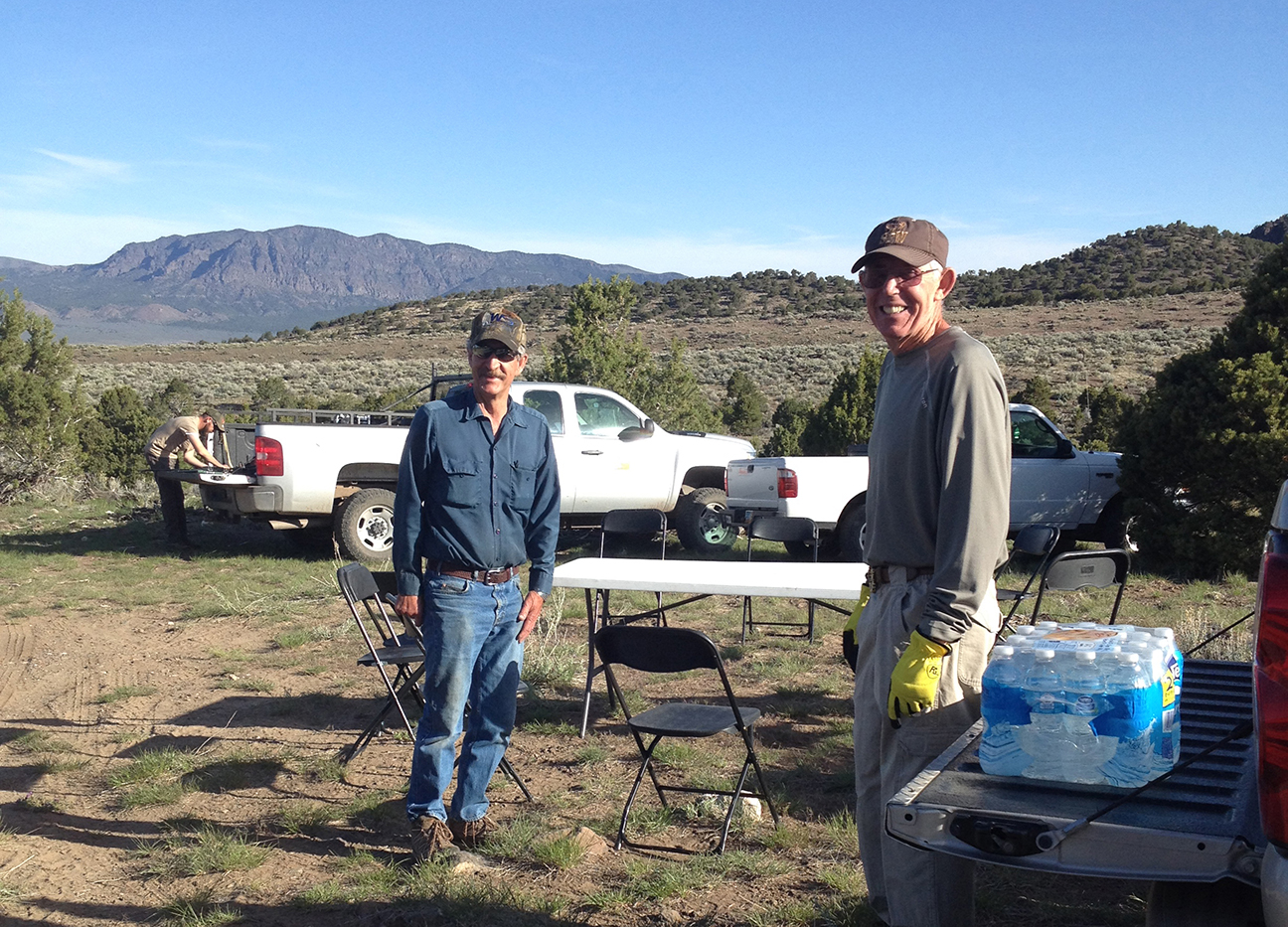 Mule deer wintering habitat on Southern Utah’s Parowan Front north of Cedar City is in need of improvement. True to its mission, SFW was the group to step up and make that happen. SFW provided the money and the volunteers to make the project happen. Iron County Chapter volunteer and long-time SFW supporter Donnie Hunter led a group of volunteers and Division of Wildlife employees in a seeding operation designed to grow more bitterbrush, one of mule deer’s favorite forage plants especially during the harsh winter months. Recent rains since completion of the early May habitat improvement project have encouraged SFW and DWR habitat biologists hoping to make a measurable difference for deer in the area.
SFW fills position on Utah’s Statewide Mule Deer Committee
 The Utah Division of Wildlife (DWR) has asked SFW to fill a seat on the Utah Statewide Mule Deer Planning Committee. The committee, which held its first meeting in late April, has the responsibility to evaluate Utah’s ongoing mule deer management plans and explore strategies for improving Utah’s mule deer populations. SFW President Byron Bateman and SFW chapter leaders from regions throughout the state will meet regularly through September 2014 when the committee’s recommendations will be incorporated into the DWR’s 5-year Mule Deer Management Plan (2015–2019).
“Increasing the number of mule deer in areas that can support it, and targeting a higher buck:doe ratio where hunters expect to see larger and better bucks int he fall is SFW’s number one priority,” Mr. Bateman said. “We are working to improve mule deer hunting for every hunter in the state with continued investments of large-dollar projects for mule deer habitat restoration, research, transplants and highway crossings. Our position at the planning table is a key component to all of that. We are very focused on our mission, and we appreciate the strong partnership SFW has with the DWR.”
SFW Puts Mule Deer Forage on the Ground in Smithfield, Utah
 SFW members Jason Lundahl, Andy Fauth and Rod Munk joined Utah Division of Wildlife Resources planting winter forage on important deer winter range in northern Utah’s Dry Canyon near Smithfield. Approximately 1200 plants, the majority being sagebrush and birch leaf mountain mahogany, were planted. SFW also put roughly 150 curl leaf mountain mahogany on the ridge. SFW volunteers’ efforts will bolster the value of winter forage to benefit mule deer that often have difficulty surviving in this part of the state due to severe winters and deep snow.

