Archives: Game Management & Legislation
Utah Fawn Study – An SFW Story
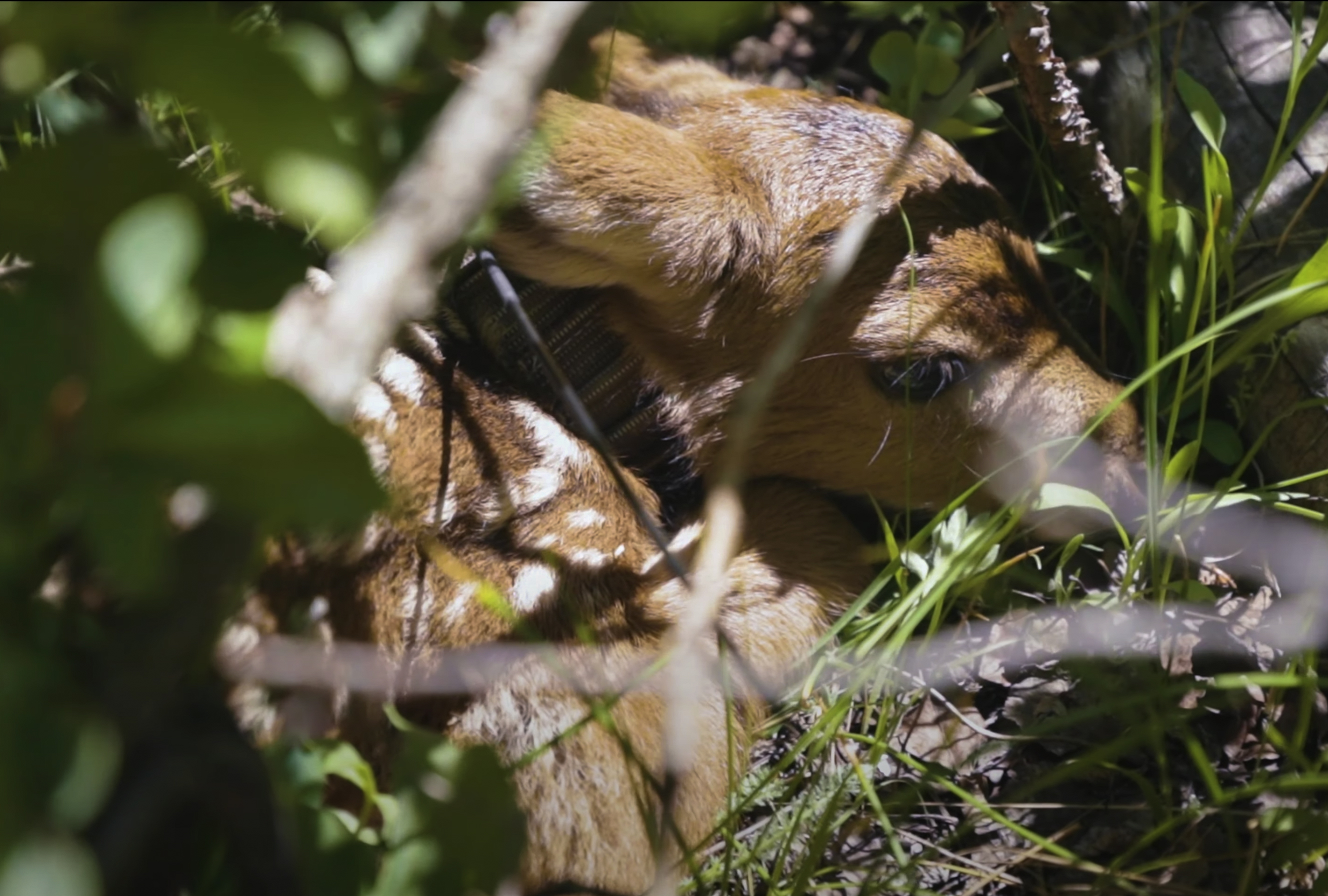
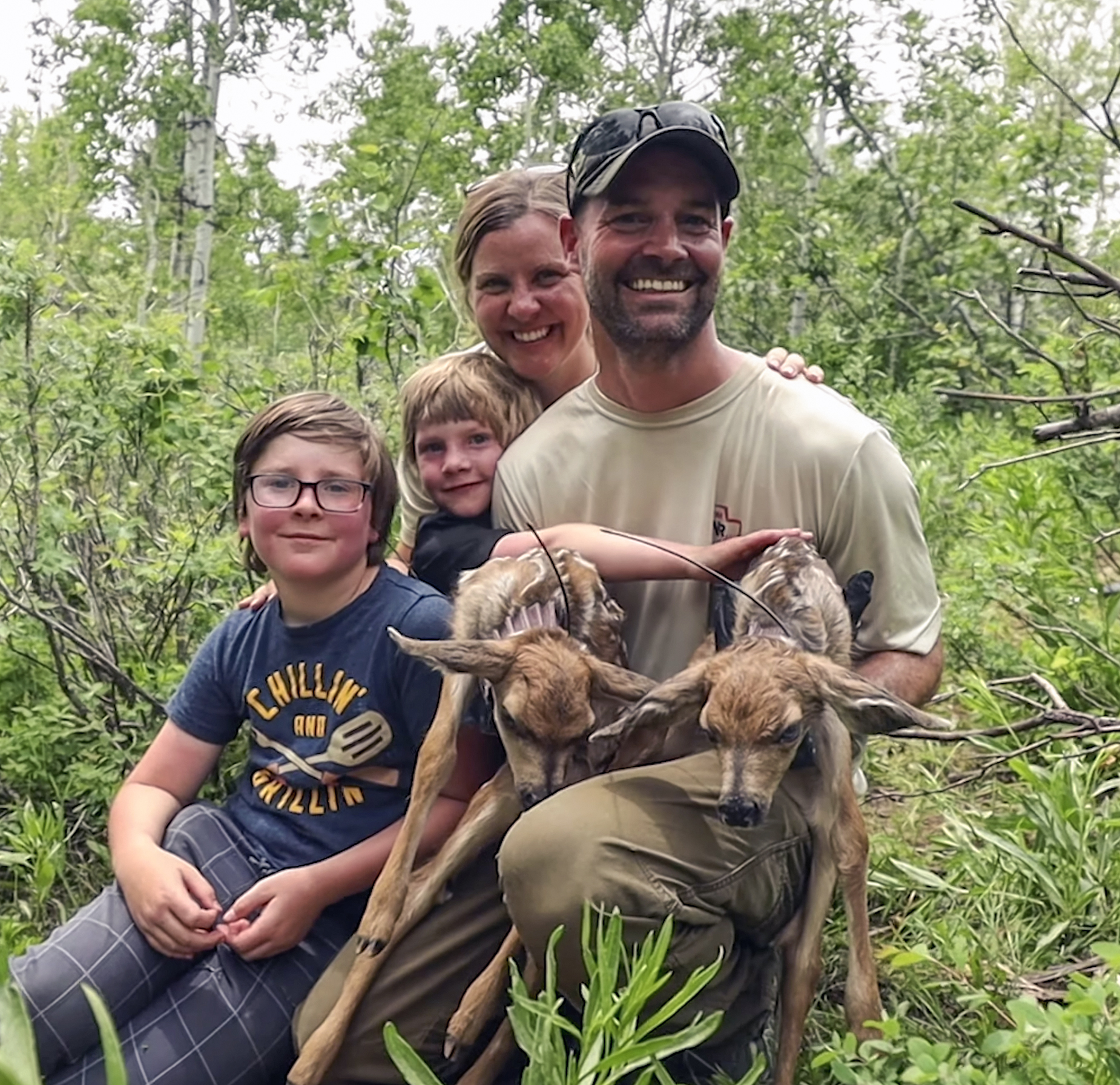
Ever wonder where all the funds raised at the Hunt Expo and other SFW events go? How it benefits you as a wildlife photographer, nature lover, hiker, biker and conservation minded hunter? We’re bringing the results directly to you here and now. We’re giving you an inside look at both the projects and the impact of your donations on the ground, for wildlife and for the benefit of all who hike, hunt and otherwise enjoy wildlife here in Utah. Watch this SFW video now.
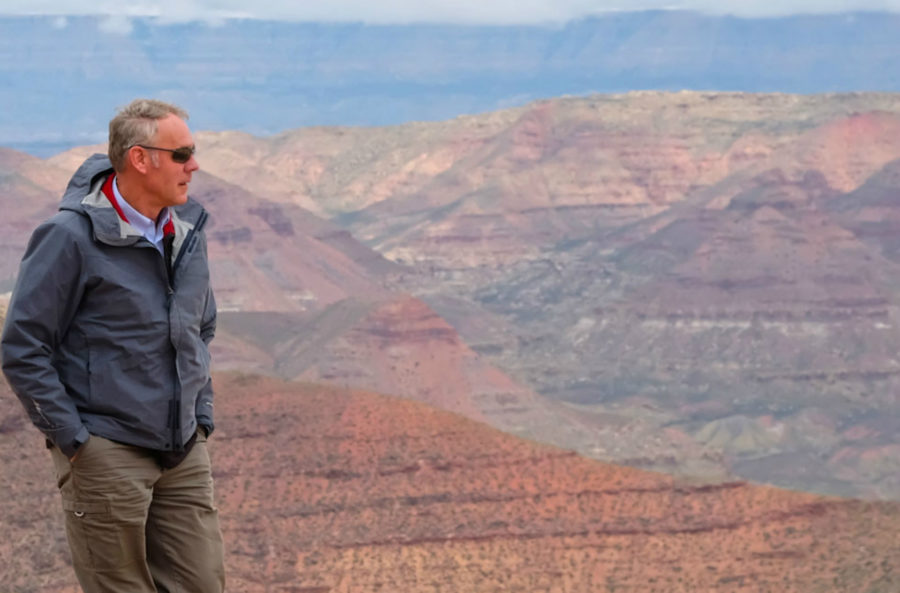
U.S Secretary Zinke Reaffirms States Wildlife Management Authority on Public Lands and Waters
A letter from U.S. Secretary of the Interior Ryan Zinke.
State Fish and Wildlife Management Authority on Department of the Interior Lands and Waters
In 1983, the Department codified in the United States Code of Federal Regulations, 43 C.F.R. Part 24, establishing a policy that Federal authority exists for specified purposes while State authority regarding fish and resident wildlife remains the comprehensive backdrop applicable in the absence of specific, overriding Federal law. This 35-year-old rule is more relevant today than ever.
Therefore, I reaffirm the authority of the States to exercise their broad trustee and police powers as stewards of the Nation’s fish and wildlife species on public lands and waters under the jurisdiction of the Department. Each of us must recognize the fundamental role of the States in fish and wildlife management, especially where States have primary authority and responsibility, foster improved conservation of fish and wildlife, and encourage a good neighbor policy with the States.
Because fish and wildlife are fundamentally dependent upon habitats on private and public lands managed or subject to administration by many Federal and State agencies, and because provisions for the protection, maintenance, and enhancement of fish and wildlife and the regulation for their use are established in many laws and regulations involving a multitude of Federal and State administrative structures, the effective stewardship of fish and wildlife requires the cooperation of the various States and the Federal Government.
The 50 State governments have extensive capacities and competencies to exercise their responsibilities to serve as trustees for fish and wildlife species resident in the respective States. These capacities and competencies are grounded in State constitutional and statutory laws, as well as an extensive body of administrative rules that collectively form a comprehensive legal underpinning to ensure that State governments effectively function as trustees of fish and wildlife resources with broad police powers to enforce those laws and regulations.
State governments have established fish and wildlife agencies that are charged with the responsibility and mandate to implement those statutes ensuring effective, appropriate, and efficient conservation and management of fish and resident wildlife species, including providing citizens with the opportunity to enjoy those fish and wildlife species through regulated hunting, fishing, and trapping. Moreover, State governments have consistently demonstrated their commitment to sustaining fish and wildlife resources in perpetuity for the benefit of both current and future citizens. To that end, State governments have taken extensive measures to protect and conserve rare fish and wildlife species, including invertebrate species, and through the actions of State governments, they have sought additional funding to strengthen their capacity to implement management strategies at a landscape level. State governments practice sound fish and wildlife conservation and management focused on sustainable practices that protect the Nation’s natural heritage, while providing for appropriate and highly regulated opportunities for citizens to enjoy fish and wildlife resources.
The States’ fundamental responsibility for fish and wildlife management includes responsibility for appropriate regulation of public use and enjoyment of fish and wildlife species. The Department recognizes States as the first-line authorities for fish and wildlife management and hereby expresses its commitment to defer to the States in this regard except as otherwise required by Federal law.
In full recognition of the authority of the State fish and wildlife agencies to regulate fish and resident wildlife within their respective boundaries and jurisdiction, I request the following:
➢ Within 45 days of this Memorandum, all Bureaus and Offices complete a review of all regulations, policies, and guidance that pertains to the conservation and management of fish and wildlife species on lands and waters under their jurisdiction that are more restrictive than otherwise applicable State provisions for the management of fish and wildlife, including all such regulations, policies, and guidance that pertain to public recreational use and enjoyment of fish and wildlife species;
➢ Within 90 days, each Bureau and Office referenced provide the Deputy Secretary a report containing detailed recommendations for the respective Bureau or Office to better align its regulations, policies, and guidance with State provisions.
➢ After receiving the reports containing detailed recommendations, the Deputy Secretary shall appropriately consult with the State fish and wildlife agencies regarding the recommendations and deliver an implementation plan to me within 120 days of this Memorandum.
– – – – – – – – – – – – – – – – – – – – – – – – – – – – – – – – – –
“This is a game changer for hunting and conservation nationwide – restoring power back to the states and state game agencies, taking it away from Washington elitists and the federal government,” said Don Peay, SFW Founder and sportsmen’s advocate.
“This is one of Greg Sheehan’s last major initiatives before leaving Washington DC. He knows who can best manage our herds, flocks and fisheries. This is just one of many of the huge changes President Trump, Sec. Zinke and their team are doing for hunters.
“In Greg’s (Sheehan) closing meeting, Sec. Zinke credited Greg and his team with opening access to nearly five million acres of land that had been previously closed to hunting, and with reducing more than 2,000 regulations that hamstring hunters.”
SFW expresses great thanks to Greg and Charlie Sheehan for serving our country, and our hunting heritage.
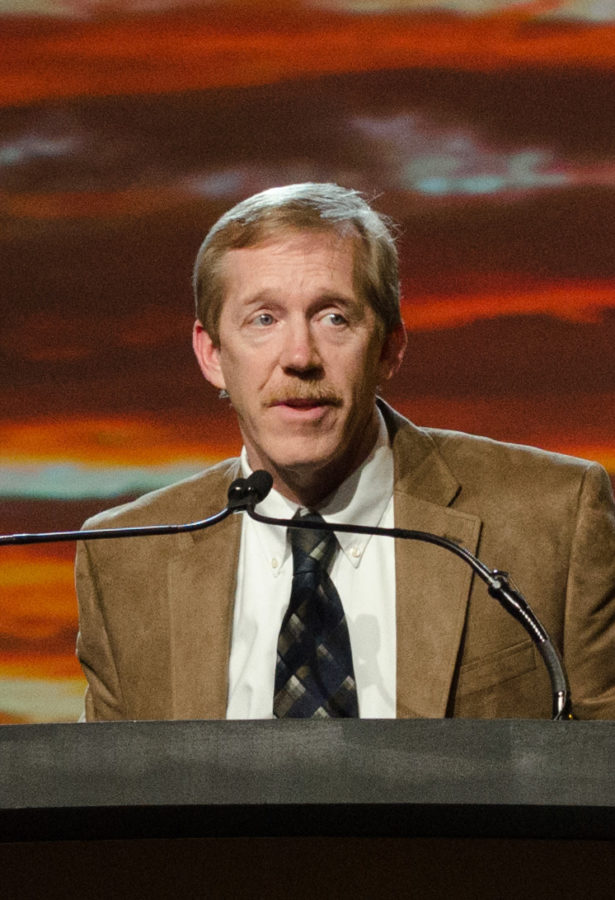
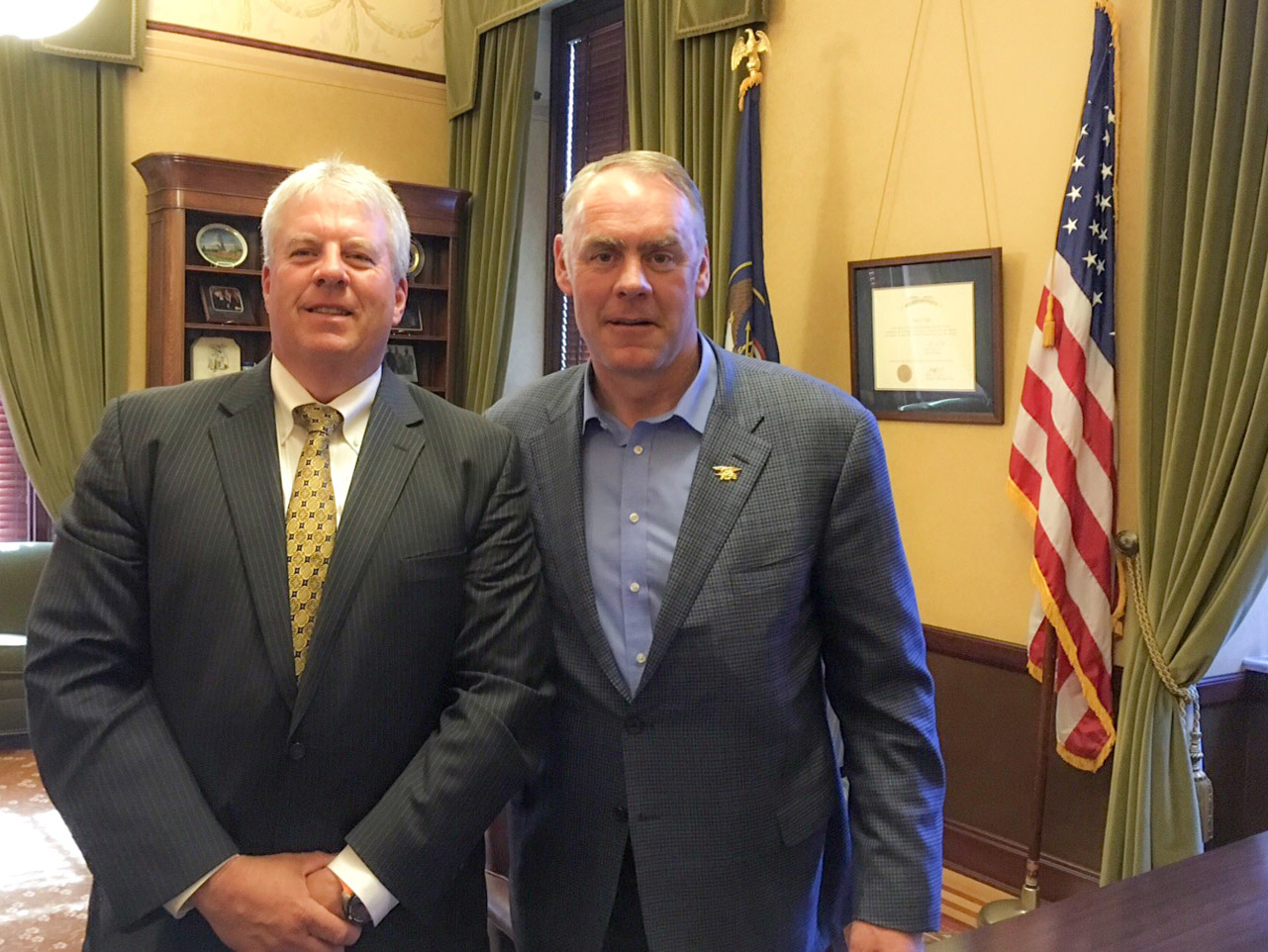
U.S. Secretary Zinke Appoints SFW Founder Don Peay to the Hunting and Shooting Sports Conservation Council
WASHINGTON – U.S. Secretary of the Interior Ryan Zinke announced the appointment of Don Peay to the Hunting and Shooting Sports Conservation Council. The Council was established on January 9, 2018, and is intended to provide the Secretary of the Interior and the Secretary of Agriculture with advice regarding the establishment and implementation of existing and proposed policies and authorities with regard to wildlife and habitat conservation.
 The Council will begin examining ways to benefit wildlife resources; encourage partnership among the public, the sporting conservation organizations, state, tribal, territorial, and federal government; and benefit recreational hunting and recreational shooting sports.
“We have assembled here some of the best conservationists in America,” Secretary Zinke said. “Over a century ago, Teddy Roosevelt established the American conservation ethic — best science, best practices, greatest good, longest term. These sportsmen carry on the American conservation ethic in the modern day. Bringing these experts together will be key to ensuring the American tradition of hunting and shooting, as well as the conservation benefits of these practices, carries on.”

Don Peay commented, “President Trump and Sec Zinke continue to make major positive structural changes to America’s land and wildlife conservation systems. This new Council made up of the most accomplished hunter/conservationists in North America will assist in revitalizing conservation of our nation’s natural treasures for generations!”
Mr. Peay joins a noteworthy list of national leaders newly appointed to the Council, including:
– Chris W. Cox, Executive Director of the National Rifle Association’s Institute for Legislative Action
– Jeff Crane, President of the Congressional Sportsmen’s Foundation
– Lawrence G. Keane, Senior Vice President and General Counsel for the National Shooting Sports Foundation
– Dan Forster, Vice President & Chief Conservation Officer, Archery Trade Associations
– Dale Hall, CEO of Ducks Unlimited
– And others
The Council is strictly advisory and the duties will consist of providing recommendations for implementation of Executive Order No. 13443 (E.O.): Facilitation of Hunting Heritage and Wildlife Conservation, Secretarial Order No. 3347: Conservation Stewardship and Outdoor Recreation, and Secretarial Order No. 3356 (S.O.): Hunting, Fishing, Recreational Shooting, and Wildlife Conservation Opportunities and Coordination with States, Tribes, and Territories.
Recommendations from the Council to the Secretary of the Interior and Secretary of Agriculture shall include, but not be limited to policies and programs that: conserve and restore wetlands, agricultural lands, grasslands, forests and rangeland habitats; promote opportunities and expand access to hunting and shooting sports on public and private lands; encourages hunting and shooting safety by developing ranges on public lands; recruit and retain new shooters and hunters; increase public awareness of the importance of wildlife conservation and the social and economic benefits of hunting and shooting; encourage coordination among the public, hunting and shooting sports community, wildlife conservation groups, state, tribal, territorial, and federal government.
# # #
Greg Sheehan Becomes Acting Director of US Fish & Wildlife Service
Greg Sheehan, the Director of the Utah Division of Wildlife Resources, has been appointed as the Acting Director of the US Fish and Wildlife Service and will become a Deputy Director to the Senate-confirmed Director to be named later. This announcement was made by the Department of Interior.
“This is very exciting news for every sportsmen in America,” said SFW Founder Don Peay. “The USFWS can play a substantial role in the conservation of land, water and wildlife.”
Mr. Sheehan brings 25 years of wildlife management experience as well as exceptional leadership and managerial skills to the Department. He was appointed Director of Utah Wildlife Resources in 2012 and has worked to recover and expand Utah big game and other species and their habitats including mule deer, sage grouse, bighorn sheep, mountain goat, wild turkey and many native fish species.
Troy Justensen, CEO of SFW added, “It is exciting to now have such an avid, passionate hunter and angler in this position. Greg will be committed to getting the most out of the USFWS to help state game and fish agencies produce abundant game and fish. We could not be more pleased.”
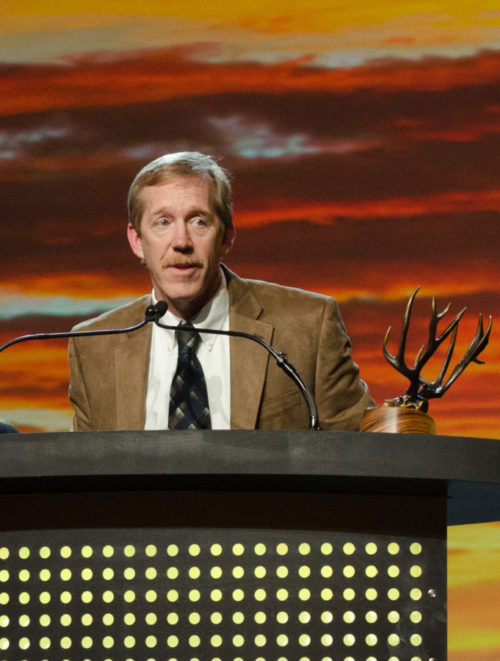
Greg Sheehan addresses crowd of sportsmen at Western Hunting and Conservation Expo
Dave Woodhouse, Chairman of the SFW Board, said, “I don’t think sportsmen in the Midwest or east coast understand the role the USFWS has in western states’ big game hunting. Greg will be a tremendous welcome change that will benefit western states big game herds, waterfowl populations and strengthen the USFWS’s partnerships with sportsmen.”
Kevin Pritchett, Vice Chair of the SFW Board, and owner of King’s Camo, said, “The multi-billion dollar hunting and fishing industry depends on strong national leadership for conservation as well as pro-hunting and fishing agendas. Greg will be an incredible breath of fresh air to America’s sportsmen who contribute more than $1.1 billion to conservation annually through excise taxes on our outdoor gear.”
Utah’s abundant big game herds of Mule Deer, Elk, Bison, Moose, Mountain Goats, Desert Bighorn and Rocky Mountain Bighorn sheep, cougar, antelope and bear are world-renowned for their abundance and quality. These herds are the anchor for the hugely successful Western Hunting and Conservation Expo attended each year by more than 45,000 sportsmen from 17 countries.
Don Peay added, “Greg has played a huge role in building and maintaining these herds, and understanding the conservation benefits of having strong partnerships with conservation groups, industry, and sportsmen. While he will be missed here in Utah, we look forward to his influence on a higher playing field in the coming years.”
Mr. Sheehan is accomplished and skilled at solving wildlife and landowner conflicts, bringing diverse sportsman’s groups together, and engaging the broader public to meet the challenges of modern day wildlife management. Greg has supported the release of species that haven’t been common on the landscape in decades to get citizens engaged and back in the outdoors enjoying wildlife. He encourages pheasant and chukar releases, youth recruitment days, walk-in access properties, birding programs, local community fisheries and the development of a new nature center on the shores of the Great Salt Lake ecosystem. He has a Bachelor’s degree in Business Administration and an MBA.
– END –
President Trump Signs National Monuments Review Order
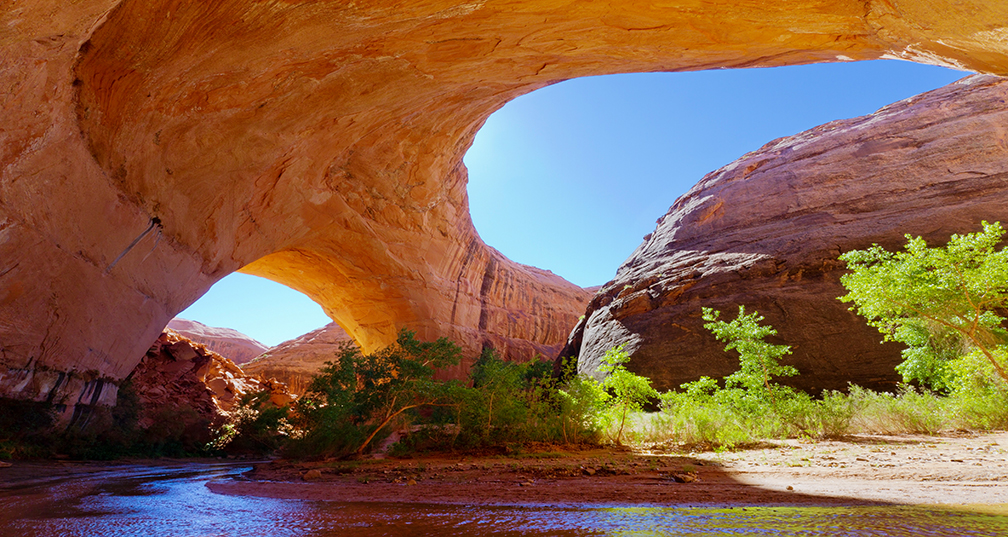
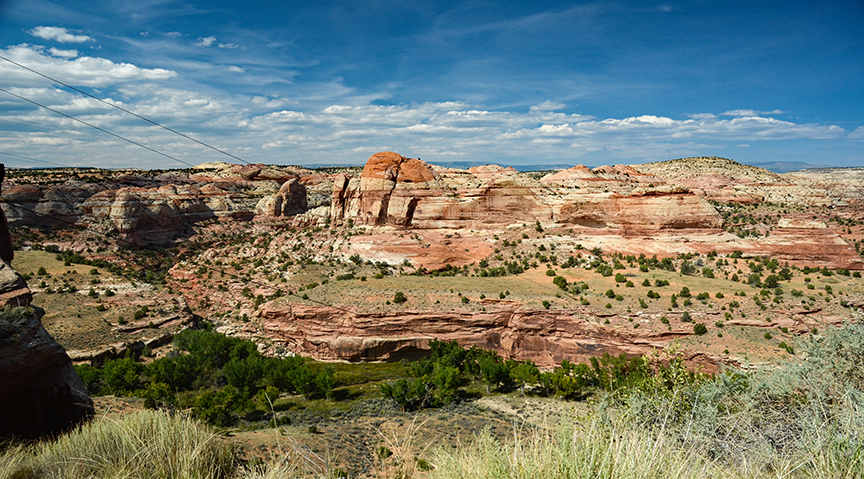
President Trump signed an Antiquities Act Executive Order this morning demanding a review of national monuments.
Today during a White House press conference, President Donald Trump signed an executive order directing Interior Secretary Ryan Zinke to review the designation of tens of millions of acres of land as “national monuments”. This action could restore multiple use protections on millions of acres of lands in Utah and other states, including the Grand Staircase and Bears Ears national monuments of southern Utah.
President Trump made it clear that the power was coming back to the local people and communities. Secretary Zinke, who is an avid Sportsmen, was at the signing. Today’s event will lead to a visit from Secretary Zinke to Utah to tour the national monuments. Zinke promises to provide a preliminary review with a specific recommendation on the Bears Ears within 45 days.
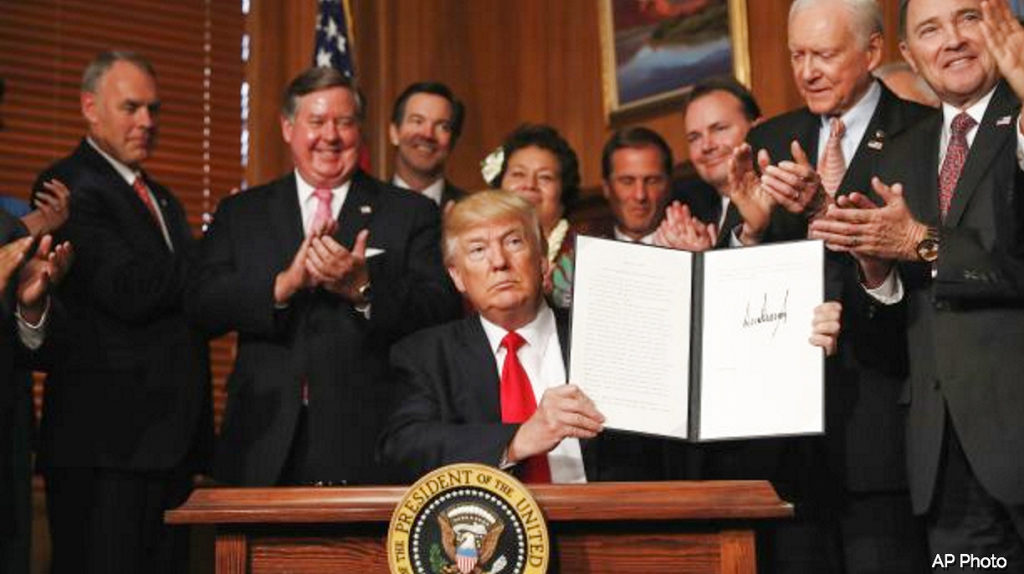
Utah’s entire delegation was also present during the signing, including U.S. Senator Orrin Hatch, Governor Gary Herbert, Congressmen Chris Stewart and Rob Bishop also attended. Senator Hatch, particularly, was singled out by President Trump for “his relentless efforts to restore power to the people”.
Don Peay SFW founder said, “The Western United States land and wildlife management is all about politics, public laws and policies. In our collective efforts we have given the small towns and sportsmen and ranchers a voice – a voice now being heard even in the White House.”
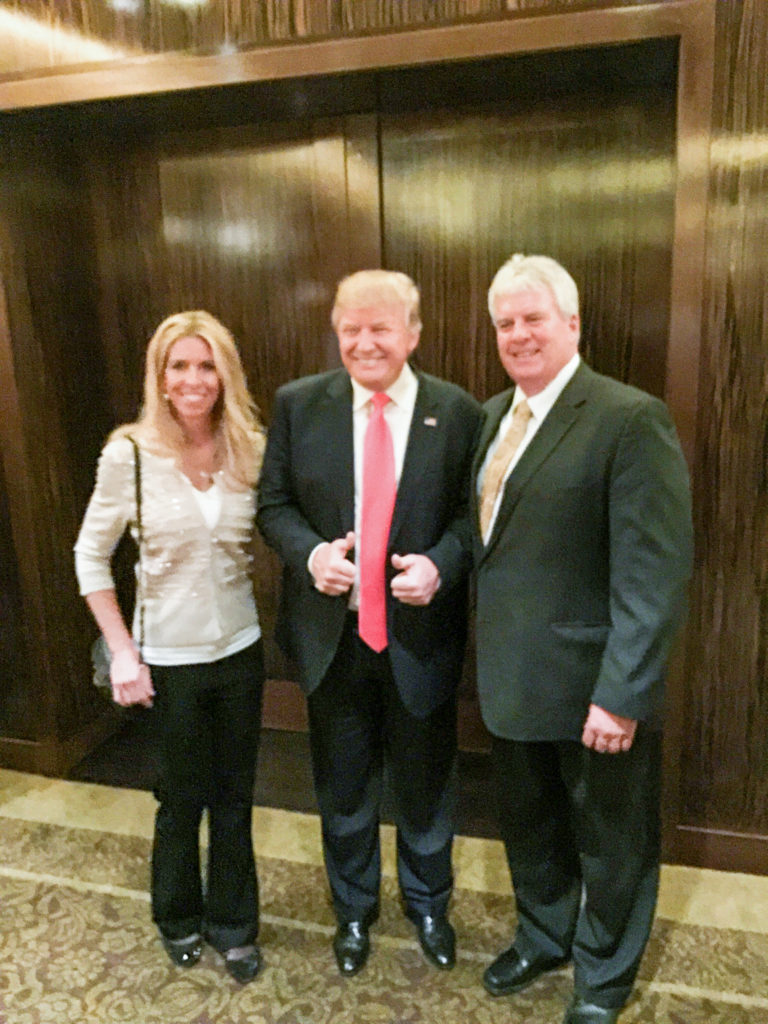
Tony Chavira and Tiffany Kimmerle, Co-Chairmen of SFW’s San Juan County Chapter, have spent their lives living, working and recreating throughout southern Utah. Both are encouraged by the action and commented, “It’s the local communities, ranchers and residents of San Juan and Kane counties that are affected most by the designation of these national monuments but our voices of concern over it have scarcely been heard. It is so gratifying to know we have a president who cares enough to listen to reason and address the federal government overreach that these monuments represent.”
The Antiquities Act of 1906 authorizes the president to declare federal lands as monuments and restrict how the lands can be used. Far too often, national monuments turn into National Parks, which eliminates hunting opportunities.
The language in President Trump’s order reads:
“The Antiquities Act Executive Order directs the Department of the Interior to review prior monument designations and suggest legislative changes or modifications to the monument proclamations,” the order’s language says.
SFW expects more exciting announcements from Washington in the coming weeks that will benefit sportsmen and wildlife in substantial ways.
– END –
SFW States Position on Public Lands
Sportsmen for Fish & Wildlife (SFW) issued the following position regarding public lands:
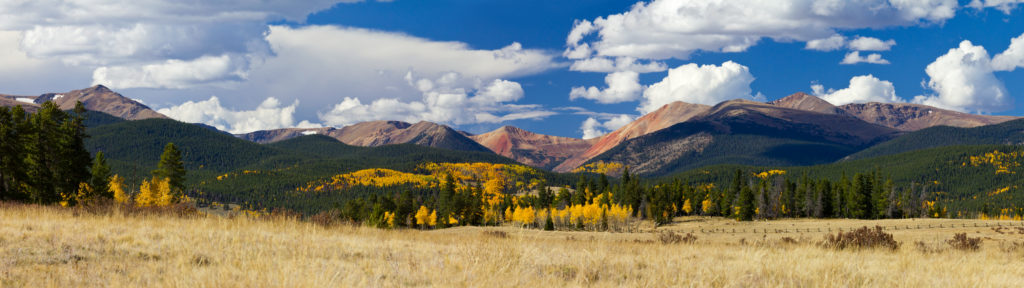
Sportsmen for Fish & Wildlife (SFW) is opposed to the sale of any public land. SFW believes there is room for improved correlation and joint efforts between state and federal agencies in the management of public land but that the sale of these public lands is not in the best interests of wildlife, sportsmen or local communities. SFW believes that the public lands of the Western U.S. are the lifeblood of our way of life, and that public access and the multiple use of these lands must be maintained. Our way of life depends on these lands remaining open and accessible. Our public lands are the very center of our outdoor and hunting heritage. SFW believes that without our public lands, we would have little hope for a future of hunting and wildlife conservation. SFW is committed to fight to keep public lands open with abundant wildlife for all to enjoy.
Additionally, SFW restates it long-standing support for land management that:
– remains open to public access
– protects wild and remote places, and the wildlife that depend on it
– works toward producing abundant big game, upland game and aquatic species
– provides for state fish and game agencies to manage all wildlife within state borders, including big game, upland game, fisheries and predators
– ensures opportunities for habitat restoration, “Healthy Land Initiative” opportunities and watershed enhancement and protection
SFW’s Mission Statement – The mission of SFW is to promote the protection and enhancement of wildlife habitat, assist in providing quality wildlife management programs, educating the public about the role hunters play in wildlife conservation, and perpetuating the family tradition of hunting and fishing.
Sportsmen for Fish & Wildlife is a 501(c)(3) non-profit charitable wildlife conservation organization headquartered in northern Utah. SFW has funded more than $13.5 million in Utah Wildlife and Habitat Enhancement projects since 2001. For more information about SFW and wildlife conservation projects throughout the state, visit www.SFW.net.
–––– • • • ––––
Official Statement on the Proposed Bears Ears Monument in Southeastern Utah
Sportsmen for Fish & Wildlife (SFW) strongly opposes the proposed creation of the 1.9 million-acre Bears Ears Monument in southeastern Utah. We recognize the proposed monument as a serious threat to Utahns’ and the native people of the region’s way of life and ability to live and pursue traditions that have been enjoyed by their ancestors for centuries.

SFW fears that this monument would take control and management of the land from locals and natives, who use it everyday and rely on it for their livelihood, and turn it over to the federal government thereby prohibiting the gathering of food, hunting, wood cutting and other important activities.
SFW feels that such an expansive designation would have negative affects on the wildlife and habitat that is critical to big game survival in the region. The creation of a national monument would severely threaten the expansion of wildlife and rehabilitation of healthy habitat that sportsmen and the state of Utah have invested millions of dollars building in recent decades.
SFW agrees with the beliefs of many members of the Hopi, Navaho and Ute Indian Tribes of San Juan County, who live adjacent to the Bears Ears, that a monument designation would put the Bears Ears at greater risk than ever before and that designating a monument under the Antiquities Act as a means of protecting archaeological and sacred sites of southeastern Utah is wrong.
SFW’s opposition to the proposed Bears Ears Monument is shared by the vast majority of Utah residents, according to a recent Dan Jones & Associates poll conducted for UtahPolicy.com, which found that only 17 percent of Utahns are in favor of President Obama creating the monument.
SFW calls on U.S. Interior Secretary Sally Jewel and President Barack Obama to take these points into serious consideration. We are hopeful that President Obama will show restraint and forego taking Executive Action to create another monument in the region.
Sign the online petition to let the White House know you are also opposed to a new monument.
— • —
Get Paid to Save Mule Deer
A unique program created by the Utah Division of Wildlife provides a one-of-a-kind opportunity for coyote hunters to help increase Utah’s Mule deer populations. An added benefit to the program is that successful hunters can also get paid handsomely for having fun in the field.
Utah initiated a unique predator-control program provides a cash incentive for any qualified hunter who wants to take coyotes. Participants in this program can receive $50 for each properly documented coyote that they kill in Utah. However, hunters hoping to cash in on the coyote bounty must pre-register for the program and follow through on a few simple rules.

Sen. Ralph Okerlund, a Republican from Monroe, Utah, sponsored the Mule Deer Preservation Act during the 2012 Legislative Session. The new law allocated the $50 bounty that is projected to help significantly reduce coyote populations, and thereby preventing the predation of potentially thousands of Mule deer annually.
“Our members have been behind Utah’s coyote bounty program since its beginning, and we’re excited to see the bounty has grown to fifty dollars per dog,” said SFW Coyote Specialist Bryce Pilling of Delta, Utah. “Some SFW members throughout the state spend more days hunting coyotes than they do hunting big game.”

The program’s popularity can also be measured by the number of people registered for the program, which continues to rise year after year, according to the DWR. The program is responsible for removing nearly 25,000 of the predators throughout the state.
“Coyotes occur in every corner of the state and are responsible for a large number of deer kills,” Pilling added. “Coyotes take deer year-round, but especially in the spring and early summer months. That’s why we encourage our members to hunt these predators all year long.”
SFW is greatly encouraged by the fact that Utah’s deer herds are on the rebound. Leadership at SFW meets regularly with the DWR to discuss the program and its effectiveness. SFW agrees with wildlife biologists and game managers that the state’s coyote bounty program is a key component to the long-term health and growth of deer populations state wide.
How does Utah’s Predator Control Program benefit mule deer?
Several key factors can affect mule deer survival and limit deer numbers, including the severity of weather and the amount of forage available during wintering months. In years with mild weather and high quality and quantity habitat is available, then removing predators is likely to increase fawn survival rates.
Register for the program.
If you are interested in participating, you must first complete an online training course. Registration is easy, and before you know it you can be making money while you simultaneously help save Utah’s deer.
Below is a list of required steps:
1) Complete the online training and registration course
2) Find coyote check-in locations and times
3) Download the Coyote Compensation Form
4) Review the statewide map (382 KB PDF)
5) Read the program report for 2015 online
6) Apply for the Targeted Predator Control Program
Learn more.
Learn how to register for the program, where to check your coyotes, and other details about Utah’s coyote bounty program here.
SFW Board Member Byron Bateman Appointed by Governor Gary Herbert to Utah Wildlife Board

Sportsmen for Fish & Wildlife (SFW) announces the resignation of Byron Bateman from the SFW Executive Board. Mr. Bateman has accepted a recent appointment by Utah Governor Gary Herbert to serve on the Utah Wildlife Board.
Mr. Bateman immediately tenured his SFW resignation from the SFW board upon learning of his appointment by the governor. He has served SFW for nearly 20 years as its former President and CEO, Chief Financial Officer, and most recently as a member of the SFW Executive Board. He will officially take his seat on the Utah Wildlife Board at the August 2015 board meeting.
“I am very gratified by this appointment by the governor,” Mr. Bateman said. “There are few things in this world more important to me than Utah’s wildlife. I am committed to representing the people of Utah, and I look forward to serving in this capacity for the next several years.”

The Utah Wildlife Board consists of seven citizens from different parts of the state. In August, Wildlife Board members Jake Albrecht and Bill Fenimore will leave the board after six years of service. Mr. Bateman lives in Weber County and replaces Mr. Fenimore in the Northern Utah region. The board meets regularly to review and modify the wildlife administrative rules in order to meet the changing needs of Utah’s wildlife. Before board members make changes to wildlife rules, they listen to recommendations from Utah Division of Wildlife biologists. They also receive input from the public and various interest groups via the regional advisory council (RAC) process.
“I can’t think of anyone more passionate or more qualified to influence Utah’s wildlife management policies than Byron is,” said SFW Founder and Board Member Don Peay. “It is reassuring to know his expertise will lead to recommendations the board makes to the Utah Division of Wildlife and the Utah Legislature. Our wildlife is in great hands.”

Commenting on the developments, Mr. Bateman added, “I’ve served on SFW’s executive team and with its state and chapter leaders for nearly two decades. This is a wonderful, growing organization that knows how to get tough things done. I hate to give that up. But the Wildlife Board position opens a big door and a new phase in my life. And I am excited to participate and give this my all.”
Mr. Bateman, along with the six other board members, will attend up to seven wildlife board meetings each year. The meetings are typically held in Salt Lake City at the Utah Division of Wildlife Resources offices on North Temple. Representatives from SFW attend all Utah Wildlife Board meetings and RAC meetings as they work to achieve the SFW mission.
A New Herd of Mountain Goats on Utah’s La Sal Mountain Range
SFW staff and volunteers joined Utah Division of Wildlife biologists and US Forest Service personnel in the capture and release of 15 mountain goats onto the La Sal Mountains southeast of Moab.
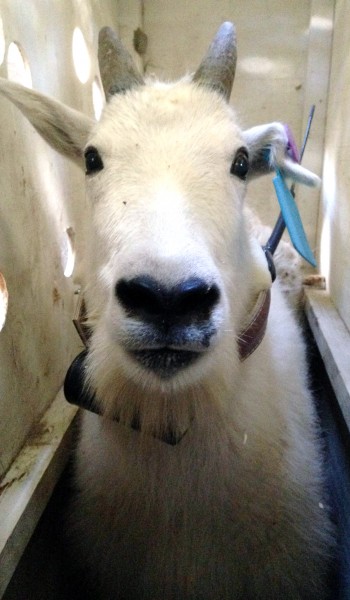
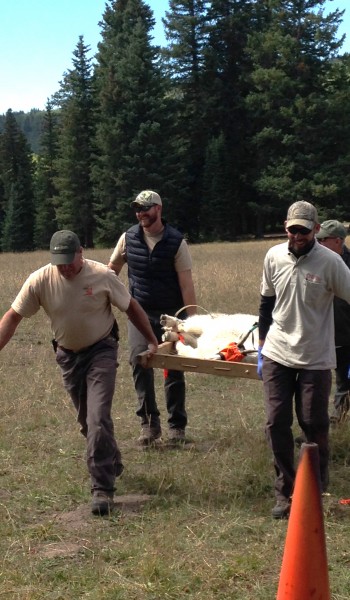
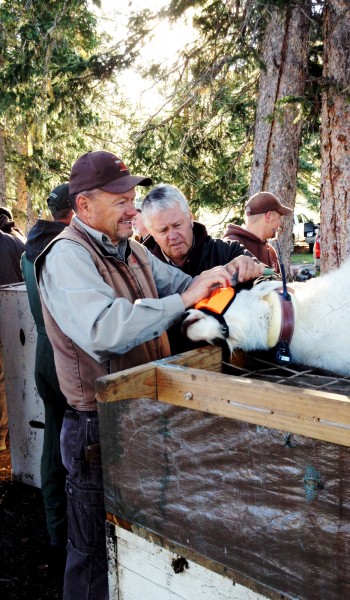
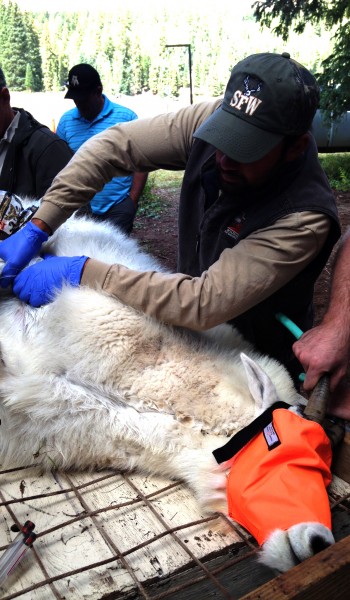
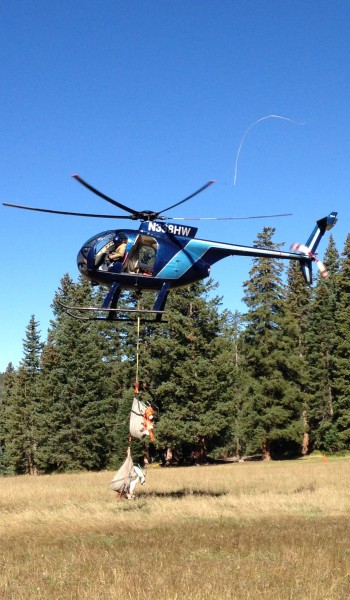
The goats – 5 billies and 10 nannies – were captured off of the Beaver Mountains, approximately 250 miles from the release site. Each goat was processed, measured and fitted with a GPS collar.
“All hands were helping as we loaded the goats into transport boxes for the ride to the La Sals,” said Bryce Pilling, SFW staff member. “These transplant projects are a unique opportunity for us to handle big game animals while working closely with DWR biologists.”
Brayden and Paula Richmond, Chairs of SFW’s Beaver Chapter, participated and also provided food for the crew of 35 people on site. SFW, Utah DWR and the US Forest Service were all represented on the mountain.
Riley Peck, DWR Southern Region Wildlife Biologist led the group effort. He said, “These goats should succeed and integrate well with 20 existing goats that were released with SFW’s help at the same location in 2013. Ultimately, we are confident these animals will establish a new, permanent herd of mountain goats here on the La Sal range.”

