Archives: Featured
Day One: Interior Secretary Zinke Signs Orders to Expand Access to Public Lands
Orders Strengthen America’s Outdoor Heritage & Restore Opportunities for Sportsmen and Anglers.
WASHINGTON – On his first day on duty, Department of the Interior Secretary Ryan Zinke (pronounced ZINK-ee) issued two secretarial orders, which expand access to public lands and increase hunting, fishing, and recreation opportunities nationwide. These orders deliver on promises made by both President Donald J. Trump and Secretary Zinke to expand access to America’s public lands. The action was hailed by representatives from sportsmen, conservation, and recreation organizations.
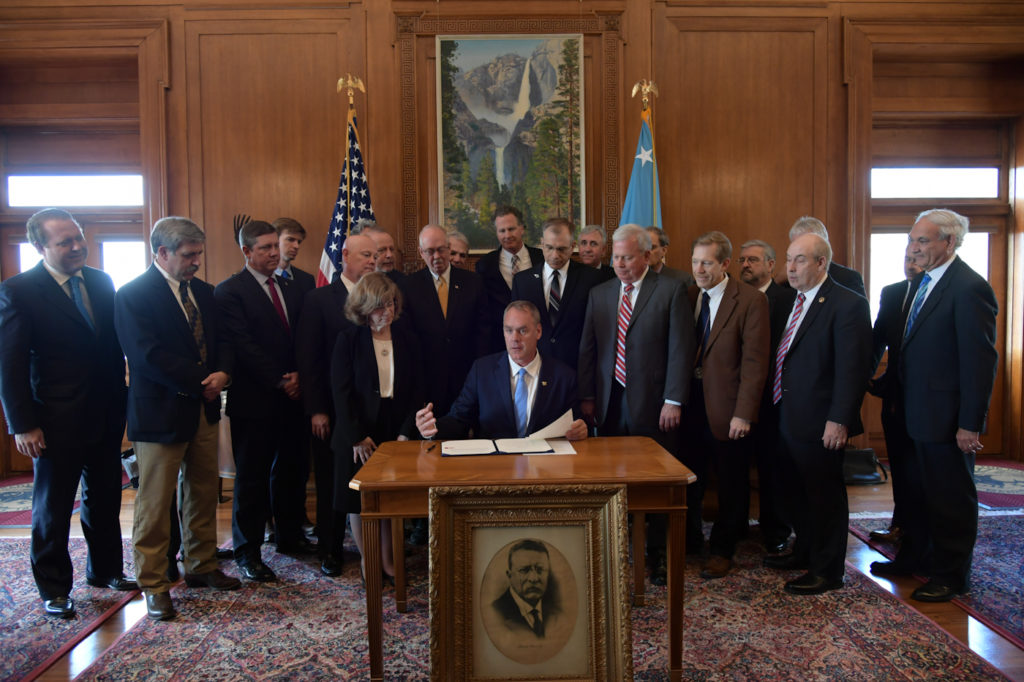
“Outdoor recreation is about both our heritage and our economy. Between hunting, fishing, motorized recreation, camping and more, the industry generates thousands of jobs and billions of dollars in economic activity,” said Zinke. “Over the past eight years however, hunting, and recreation enthusiasts have seen trails closed and dramatic decreases in access to public lands across the board. It worries me to think about hunting and fishing becoming activities for the land-owning elite. This package of secretarial orders will expand access for outdoor enthusiasts and also make sure the community’s voice is heard.”
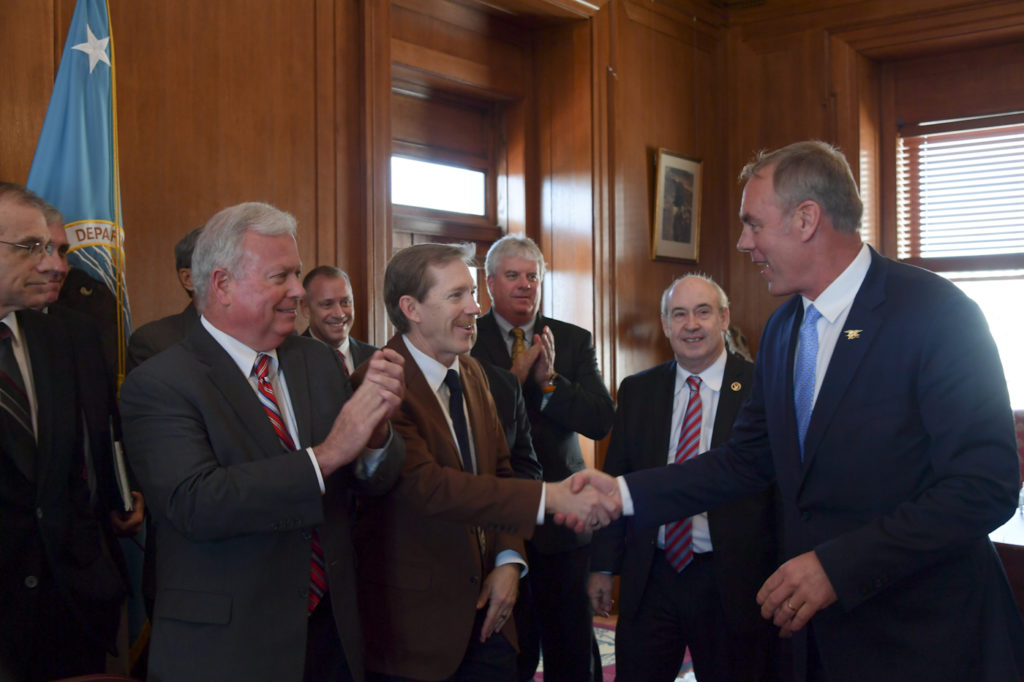
The two secretarial orders include:
Secretarial Order 3346 advances conservation stewardship, improves game and habitat management, and increases outdoor recreation opportunities by directing bureaus and agencies to immediately identify areas where recreation and fishing can be expanded. The order also requests input from the Wildlife and Hunting Heritage Conservation Council and Sport Fishing and Boating Partnership Council to provide recommendations on enhancing and expanding access on public lands and improving habitat for fish and wildlife.
Secretarial Order 3347 overturns the recent ban lead ammunition and fish tackle used on Fish and Wildlife Service lands, waters, and facilities. The order highlights the need for additional review and consultation with local stakeholders.
Secretary Zinke was joined by Sportsmen for Fish and Wildlife Founder Don Peay, representatives from the Congressional Sportsmen’s Foundation, National Shooting Sports Foundation, Boone and Crockett Club, Wild Sheep Foundation, Theodore Roosevelt Conservation Partnership, National Rifle Association, Safari Club, National Wild Turkey Foundation, Archery Trade Association, Association of Fish and Wildlife Agencies, American Recreation Council, Pheasants Forever, Ducks Unlimited and National Marine Manufacturers Association.
# # #
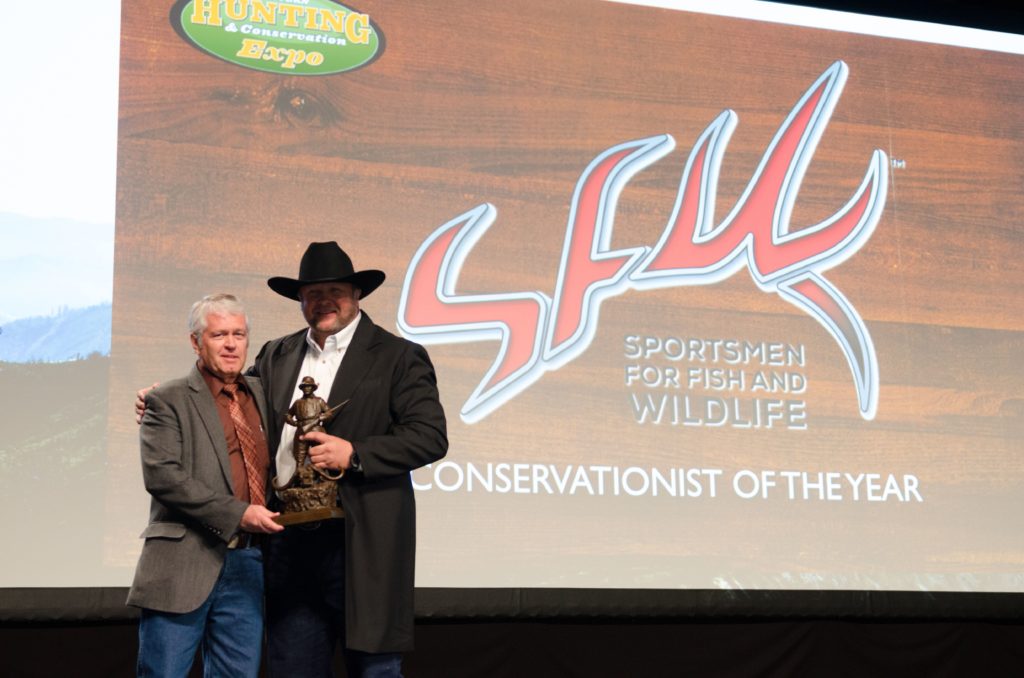
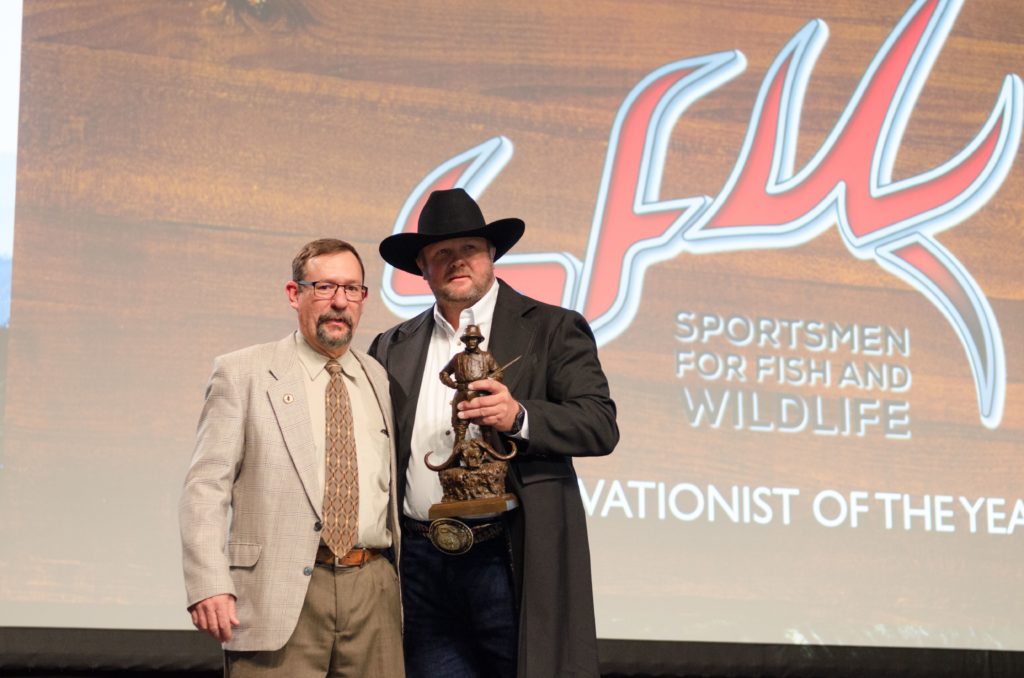
2017 Western Hunting & Conservation Expo Continues To Break Records
Salt Lake City, Utah: After four days of a busy show floor and successful evening auctions, the 2017 Western Hunting & Conservation Expo (WHCE) closed its doors Sunday afternoon Feb. 19, 2017. The show, hosted by Sportsmen for Fish and Wildlife and the Mule Deer Foundation and sponsored by Ammo & More and ACI, has become the biggest consumer sport show designed for the western big game hunter. Now in its 11th year, the WHCE has continued to exceed expectations with 46,000 attendees walking the exhibit halls and raising over $6 million for wildlife conservation efforts.
“Once again the Western Hunting & Conservation Expo is proving what wildlife conservation can achieve,” said Troy Justensen, president of Sportsmen for Fish & Wildlife. “Hunters from nearly every state attend the expo, apply for the 200 permits and purchase auction items are contributing in a very real way to Utah wildlife conservation and one of the most successful events of its kind on the planet. We are proud of how this show has grown over the last decade, and hunters can rest assured that we will continue to build and improve the event.”
Mule Deer Foundation President/CEO Miles Moretti added, “The Western Hunting & Conservation Expo continues to grow every year, and this year was no exception. We had 46,000 attendees come through the show which is great for our exhibitors who were busy the whole show. Exhibitors frequently told us this was their best show of the year. With many of them already signed up for booth space in the 2018 show, we can unequivocally say that Hunt Expo is a resounding success.”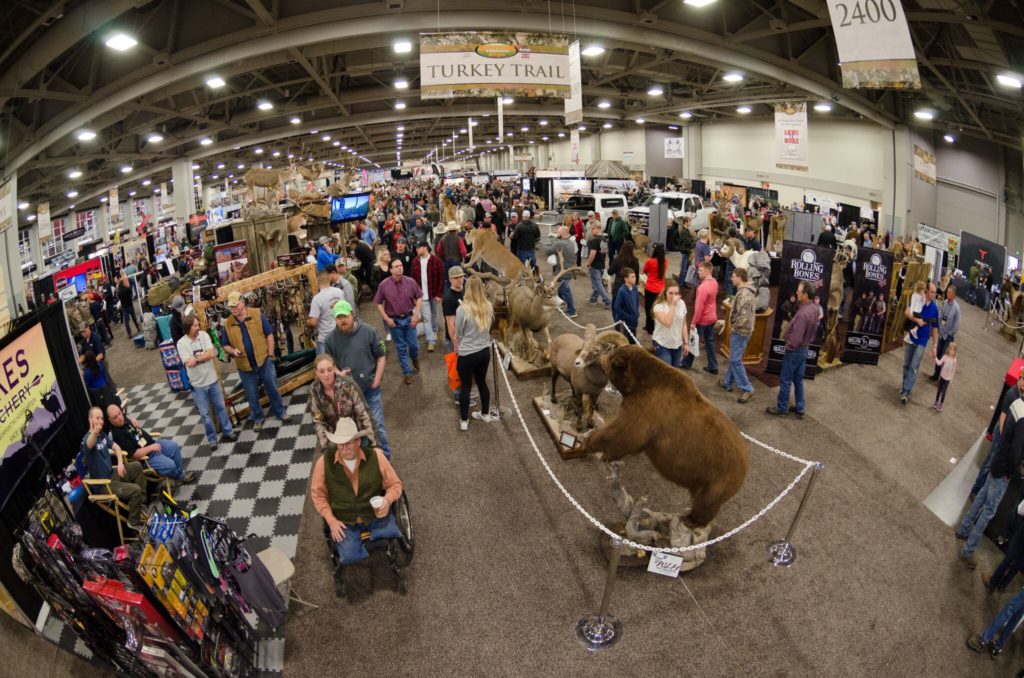
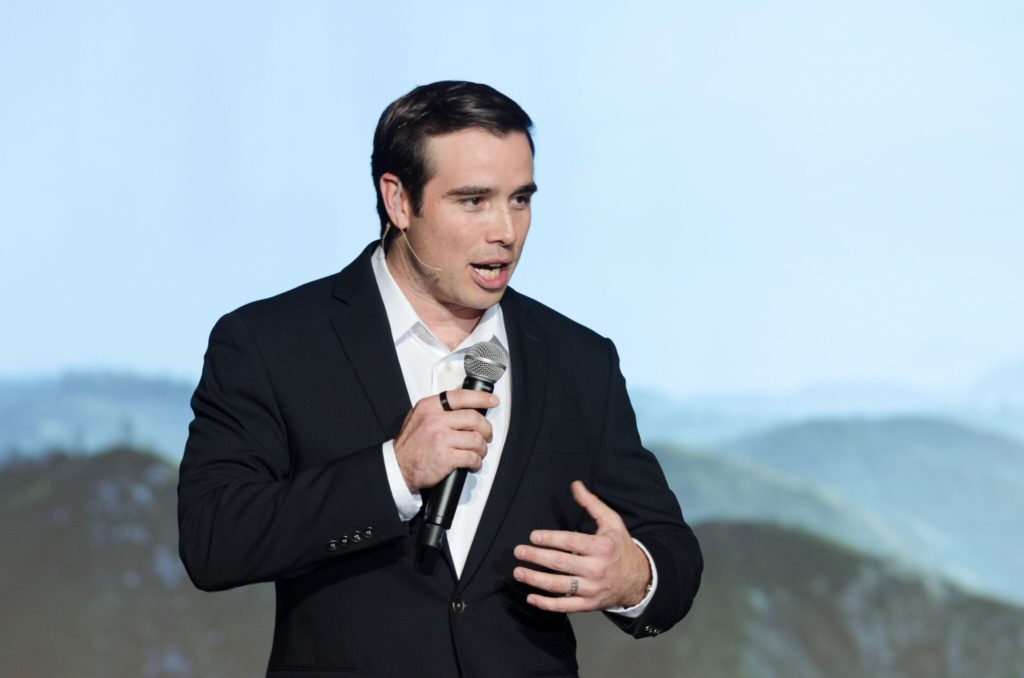
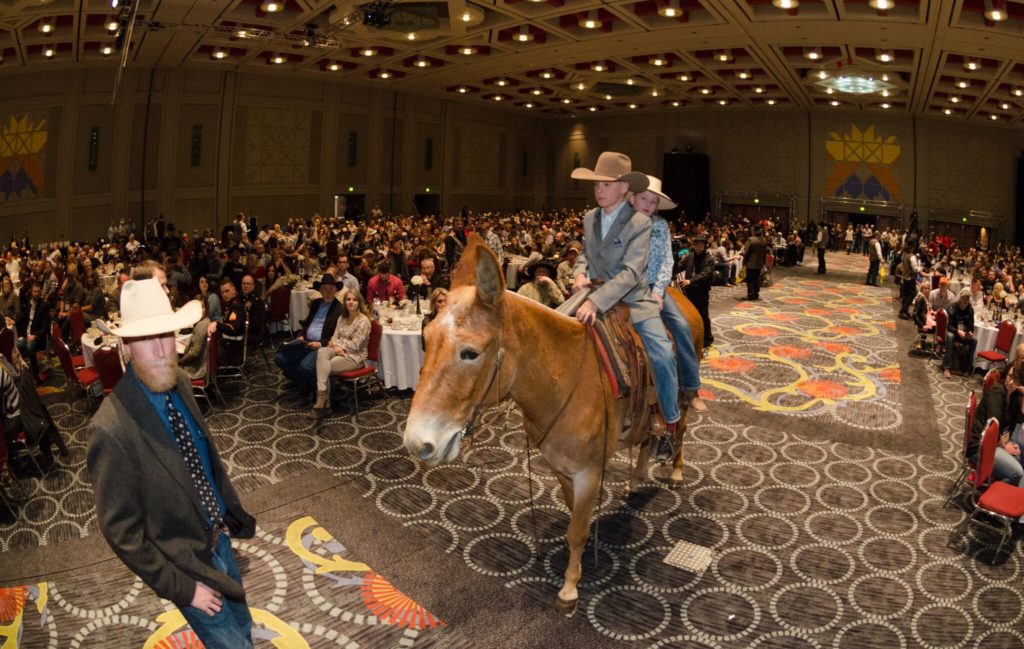
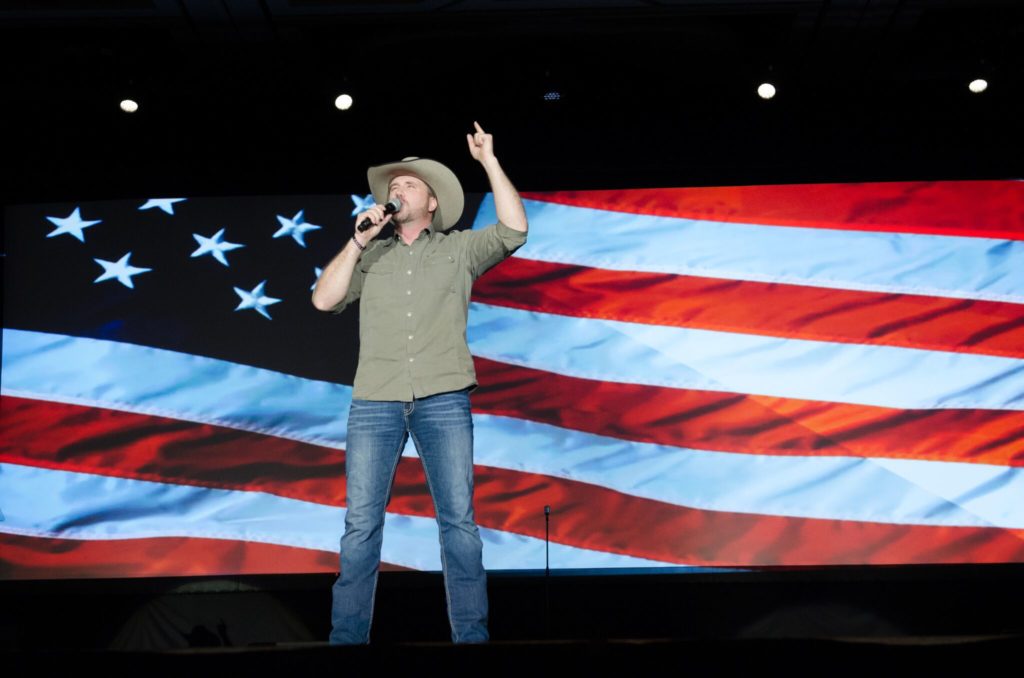
The evening events drew large crowds who took part in the banquets and auctions as well as listened to keynote speakers John Wayne Walding and Kim Rhode; Saturday night’s banquet was sold out with more than 1,700 people in attendance. The auctions featured over 140 items up for bid including governor’s tags, limited edition firearms and artwork, and much more. Top auction items this year included the Antelope Island mule deer tag that sold for $250,000 and the Arizona statewide mule deer tag that sold for $280,000. Combined with other incredible once-in-a-lifetime hunts, the auctions raised more than $4 million and 93 percent of those funds will be dedicated to habitat and conservation programs on the ground. In addition, attendees had the opportunity to enter drawings for 200 special big game tags offered by the Utah Division of Wildlife Resources for just $5 a tag. Those funds quickly add up, and are dedicated toward conservation and mission accomplishment for Utah Division of Wildlife Resources as well as MDF and SFW.
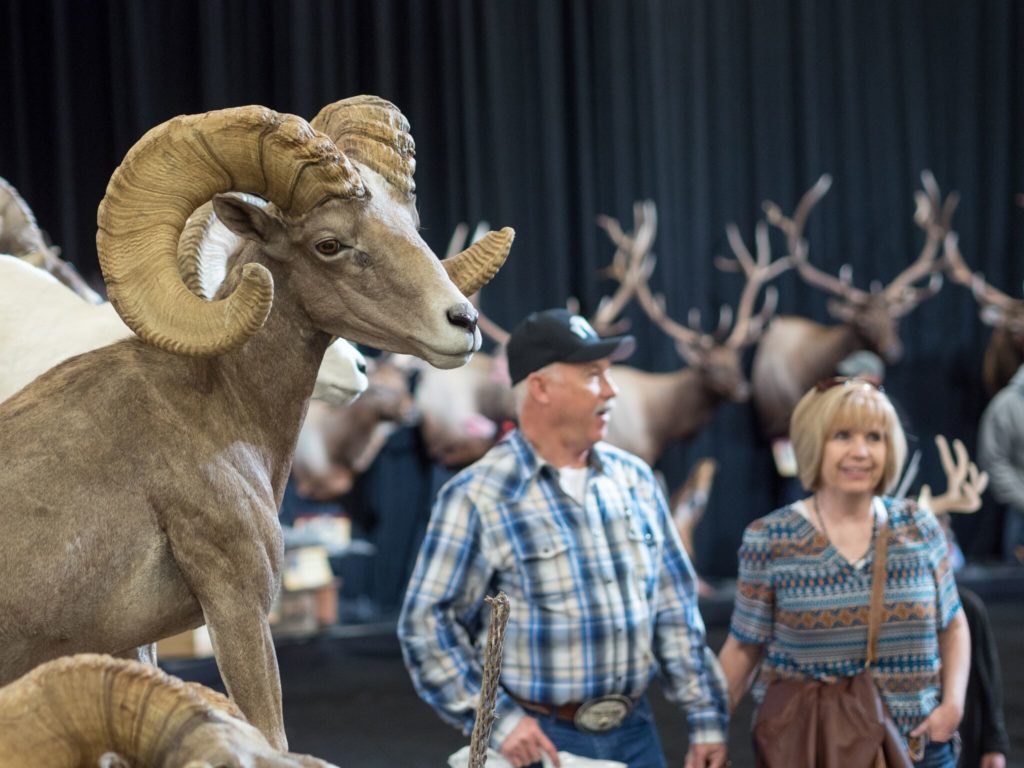
The traffic through the show floor was steady and broke records each day throughout the four-day show. The 2017 WHCE boasted an exhibit hall of over 400,000 square feet, an increase of 70,000 square feet from the previous year. The show featured top-quality outdoor manufacturers and retailers, incredible taxidermy, and first-rate guides and outfitters. Throughout the course of the weekend, attendees browsed some of the latest gear available on the market and could book their dream hunting experience. The WHCE is a family-friendly event and that was obvious with the many children of all ages walking the show floor proudly sporting their M.U.L.E.Y. antlers. Every child had the opportunity to participate in the Youth Wildlife Conservation Experience (YWCE), trying their hand at shooting, archery, fly tying, wildlife identification, and much more. Throughout the course of the weekend over 5,000 youth went through the YWCE and had a chance to enter their names into a drawing for either a hunting gear package or a guided Utah deer hunt donated by Majestic Valley Outfitters.
The 2018 Western Hunting & Conservation Expo will run from February 8-11, 2018 and it is expected to be even larger than this year’s event. Mark your calendar for next year’s event and stay up to date on planning through the WHCE website at www.huntexpo.com.
# # #
SFW States Position on Public Lands
Sportsmen for Fish & Wildlife (SFW) issued the following position regarding public lands:
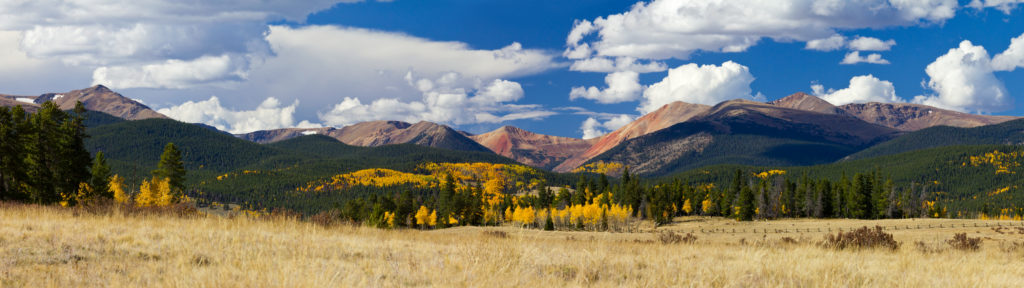
Sportsmen for Fish & Wildlife (SFW) is opposed to the sale of any public land. SFW believes there is room for improved correlation and joint efforts between state and federal agencies in the management of public land but that the sale of these public lands is not in the best interests of wildlife, sportsmen or local communities. SFW believes that the public lands of the Western U.S. are the lifeblood of our way of life, and that public access and the multiple use of these lands must be maintained. Our way of life depends on these lands remaining open and accessible. Our public lands are the very center of our outdoor and hunting heritage. SFW believes that without our public lands, we would have little hope for a future of hunting and wildlife conservation. SFW is committed to fight to keep public lands open with abundant wildlife for all to enjoy.
Additionally, SFW restates it long-standing support for land management that:
– remains open to public access
– protects wild and remote places, and the wildlife that depend on it
– works toward producing abundant big game, upland game and aquatic species
– provides for state fish and game agencies to manage all wildlife within state borders, including big game, upland game, fisheries and predators
– ensures opportunities for habitat restoration, “Healthy Land Initiative” opportunities and watershed enhancement and protection
SFW’s Mission Statement – The mission of SFW is to promote the protection and enhancement of wildlife habitat, assist in providing quality wildlife management programs, educating the public about the role hunters play in wildlife conservation, and perpetuating the family tradition of hunting and fishing.
Sportsmen for Fish & Wildlife is a 501(c)(3) non-profit charitable wildlife conservation organization headquartered in northern Utah. SFW has funded more than $13.5 million in Utah Wildlife and Habitat Enhancement projects since 2001. For more information about SFW and wildlife conservation projects throughout the state, visit www.SFW.net.
–––– • • • ––––
SFW Volunteers Get Out for Northern Utah Mule Deer
On the Ground
It was barely 10 degrees on an early Friday morning in January when SFW answered the call from Utah Division of Wildlife biologists and DWR Director Greg Sheehan to help feed mule deer in northern Utah. That’s because Winter 2016-17 has already dished out some of the harshest conditions in nearly 10 years – and mule deer in the northern reaches of the state are facing the brunt of it.
“DWR biologists have been monitoring deer and winter range conditions across Utah closely this winter,” Director Sheehan said. “Weather in the Bear Lake Valley is an anomaly compared to other locations in the state. Although weather has been severe across parts of Utah this winter, the Bear Lake area is the only location where emergency deer feeding needs to happen recently. We’re prepared to feed deer in other locations, though, if the need arises. These deer are exhausted, confused and without options. They need help.”
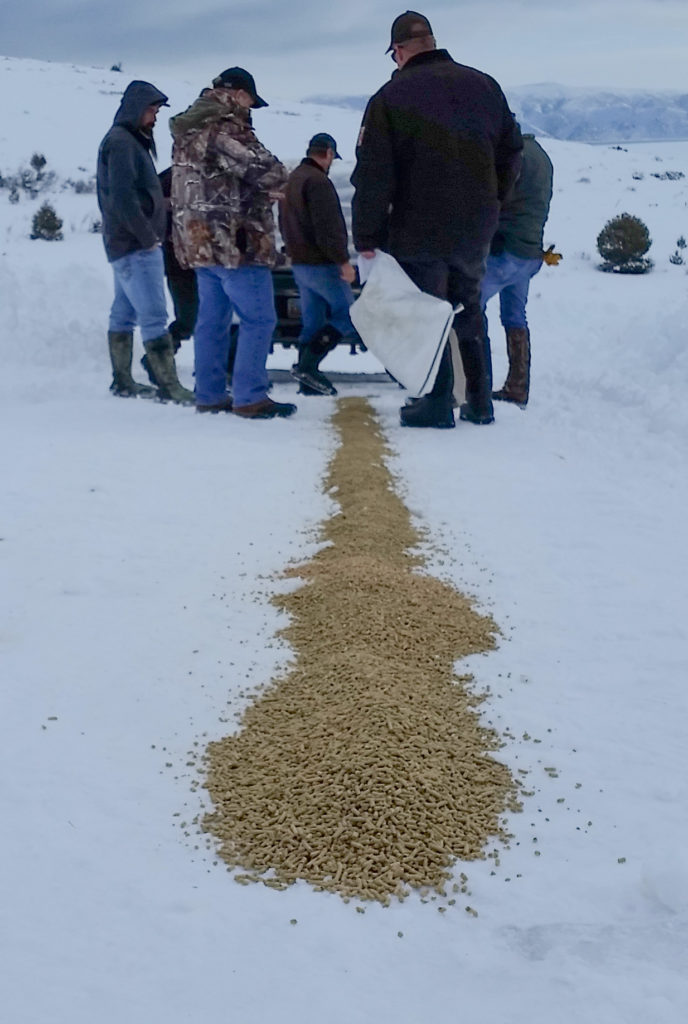
DWR biologists and the deer got the help needed from SFW. Board Member Kurt Wood, SFW Cache Chapter Chairman Jason Lundahl, SFW member Travis Hobbs of Garden City and others met DWR personnel in the dark of 6 am the morning after a 30-inch snow fall and extended periods of below freezing temperatures.
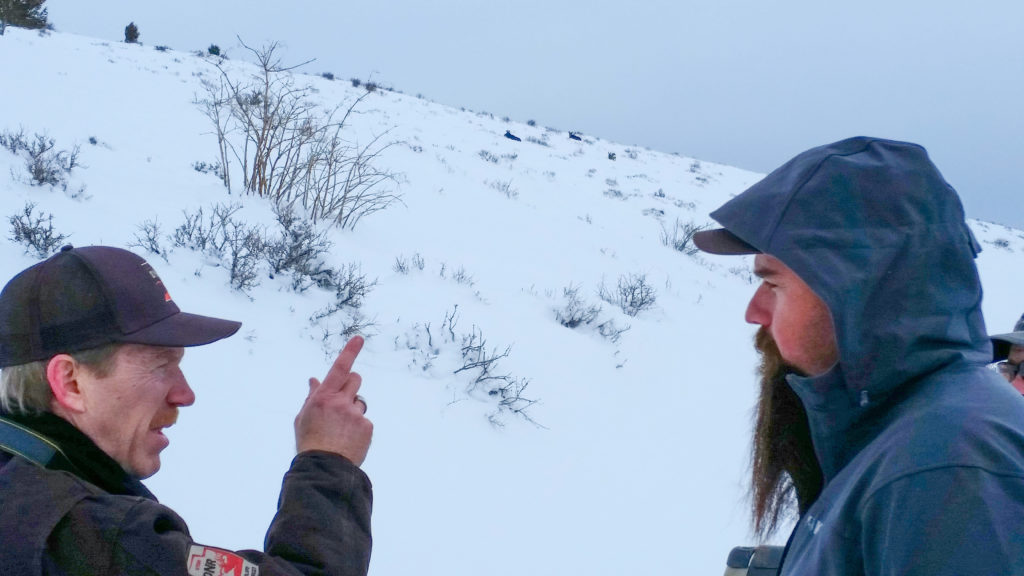
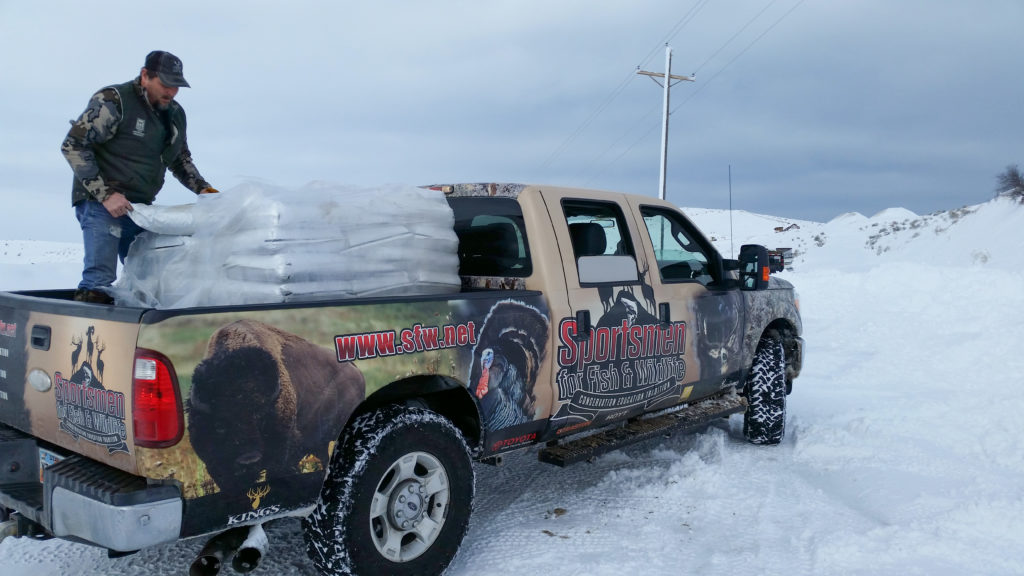
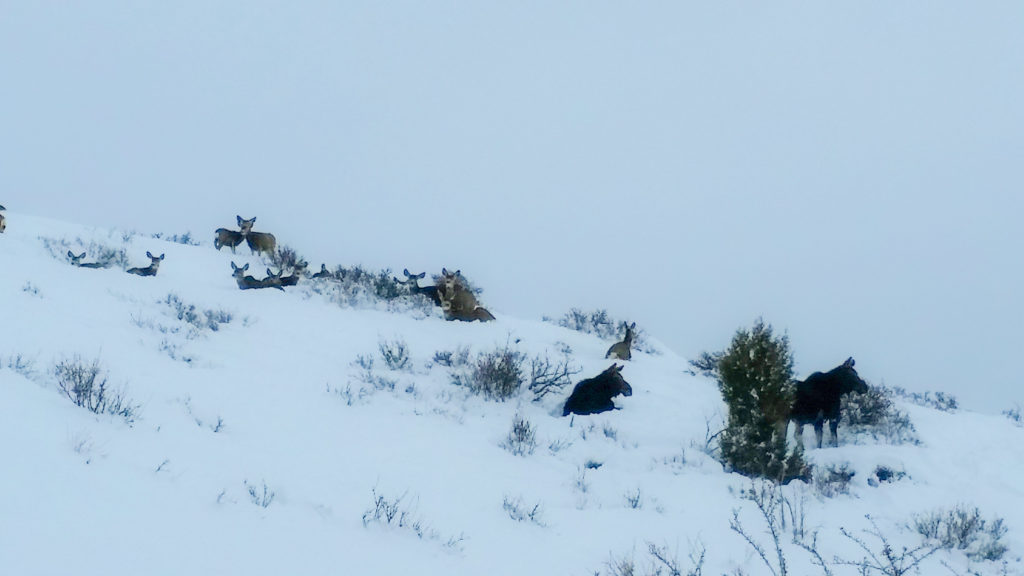
“One person in particular — Travis Hobbs — has been a tremendous help,” Sheehan says. “Travis owns a construction business in Garden City. He’s letting us store 12 tons of specially designed pellets in his warehouse. And he and his employees are donating their time and their heavy equipment to clear snow out of areas so we can spread pellets for the deer to eat. We simply couldn’t do what we’re doing without their help.”
This is the first time emergency deer feeding has been needed in Utah since 2008, according to Justin Dolling, Northern Region Supervisor for the DWR.
“We are feeding the deer a specially formulated pellet that meets the unique nutritional needs and digestive systems deer have,” Dolling said. “The specially formulated pellet is specially formulated to give deer the correct balance of energy and protein the animals need. Products other than this pellet can actually hurt the deer. We appreciate the concern many folks have about deer in Utah this winter, but we strongly discourage people from feeding deer on their own.”
Words on Wildlife
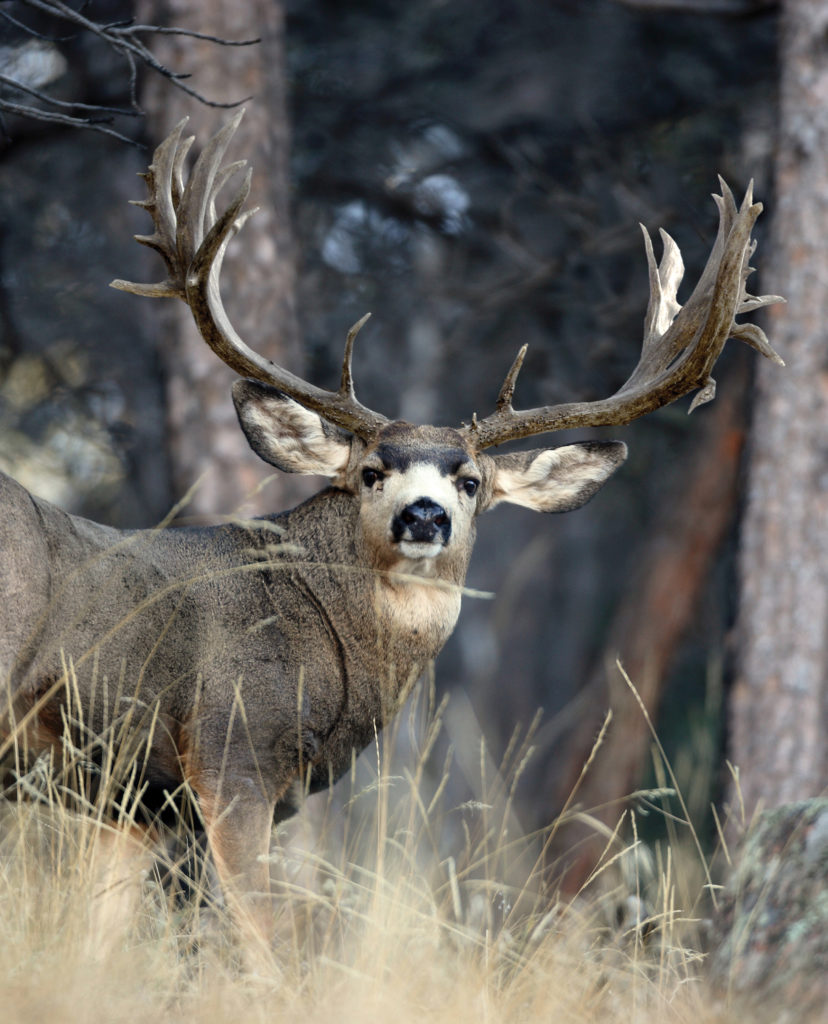
2016 was a banner year for big Mule deer in the state of Utah; several large bucks were taken on general units that will rival any buck taken on Utah’s world-renowned Paunsaugunt and Henry Mountains. Not only were there big bucks taken, but also as a whole hunters reported seeing more bucks and more deer in general.
What’s been the difference? How did it happen? I don’t believe you can point to any one thing and say, “This is the only reason.” Honestly, the star’s had to align to produce what we hunters saw this year, and they did. No doubt our deer have been the beneficiaries of several mild winters. Without high winter mortality, Mule deer herds can rebound quickly. But to say the DWR and Sportsmen have not played a role in this recovery would simply not be true. I am a firm believer we have all made a difference from the Mule Deer Protection Act, habitat projects made possible with Conservation Permit funds, multiple transplants in all regions of the state. and the direction the Statewide Mule Deer Plan have all contributed to changing the course that Mule deer were heading in our great state of Utah.
We live in a great state. From Blue Ribbon Fishery’s to abundant Big Game and multiple Upland Game and Waterfowl opportunity’s – Utah has it all. SFW is not a single species organization. We are involved in all aspects of our great hunting and fishing heritage.
I want to thank all of you personally for the years of service and support. SFW has grown into the highly effective wildlife conservation organization it is because of you. I am honored and humbled to serve you in this capacity.
Thank You!
Sincerely,
Troy Justensen
SFW President
SFW Opposes President Obama’s Bears Ears Monument Designation

Fellow SFW Members,
Over the last 30 years, we sportsmen have worked hard alongside the Utah Division of Wildlife to restore populations of elk, desert bighorn sheep, mule deer, wild turkey, black bear, cougar and other species in the region now encompassed by the newly designated Bears Ears Monument. These game species are now thriving and provide some of the highest quality hunting opportunities found in all of North America.
The creation of this monument was dictated by lame duck President Obama as he vacationed in Hawaii and is a prime example of why the majority of the people in 3,081 counties across America voted for Donald Trump while only a mere 300 counties voted for Hillary Clinton. Listen to the voice of the local people who love, make a living from and care so personally for the lands and natural resources in our own back yard – far more so than any outsider groups funded in LA or New York. And for the few who might still wonder why Donald Trump, Jr. was asked to speak at the 2016 Western Hunting and Conservation Expo – need more be said?
SFW recognizes the designation of the Bears Ears Monument as a serious threat to Utahns’ and the native people of the region’s way of life and ability to live and pursue traditions that have been enjoyed by their ancestors for centuries.
SFW and its Founder Don Peay will work with Utah Governor Herbert, the entire Utah delegation, the Trump Administration, Big Game Forever and other sportsmen networks across America to do all that is possible to reverse and/or limit the effects of the Bears Ears Monument, including:
- Reverse the designation and maintain the lands as “multiple use”
- Dramatically reduce the acreage in official monument designations
- Ensure that wildlife habitat restoration, state wildlife management of all species, including transplants and predator control, and hunting and fishing and trapping are protected as part of this unique place thus protecting sportsmen dollars that have been the catalyst for restoring the region to its current magnificent condition.
We will work until we achieve the best possible for sportsmen and all Utahns! Stay tuned for updates in early 2017.

SFW Puts Chukar on Utah’s Mountains
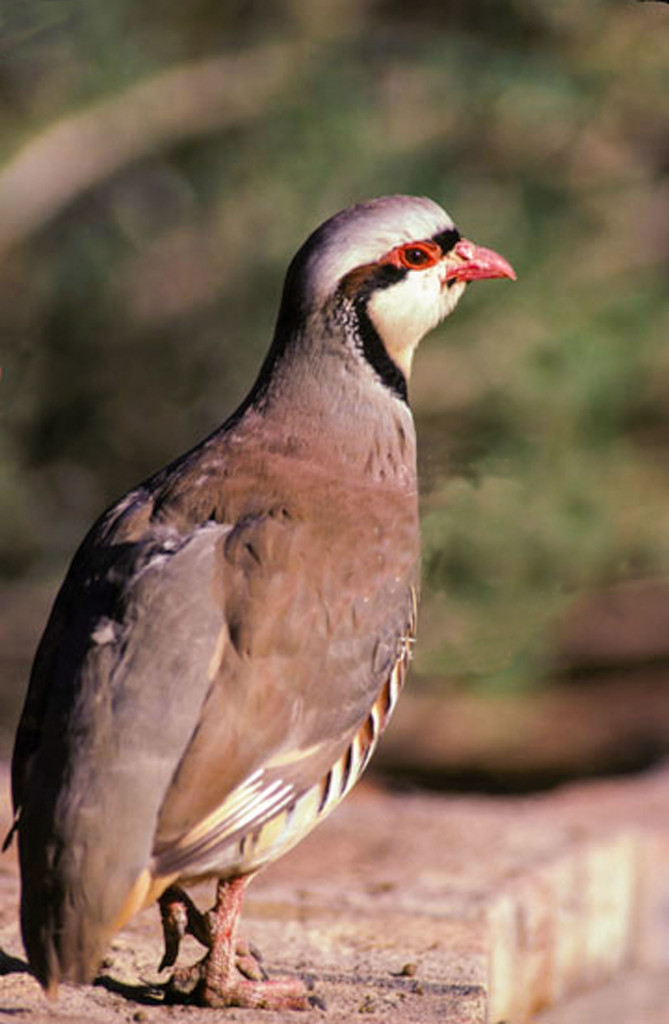
SFW purchased 2,100 Chukars chicks in 2016 and raised them to adults. Several hundred were recently released in Sevier County and surrounding areas. Some were released in Black Canyon, some at Manning Creek near the Elbow T Ranch southeast of Marysvale, and others at a site in the Breaks on Poverty Flat southwest of Monroe, Utah. More birds will be released ahead of the statewide youth pheasant, waterfowl and pheasant hunt day September 17th. Many thanks to Paul Niemeyer, DeLoss Christensen, Jake Albrecht and the SFW Sevier County Chapter team for all of their hard work with SFW’s Chukar and Pheasant programs.
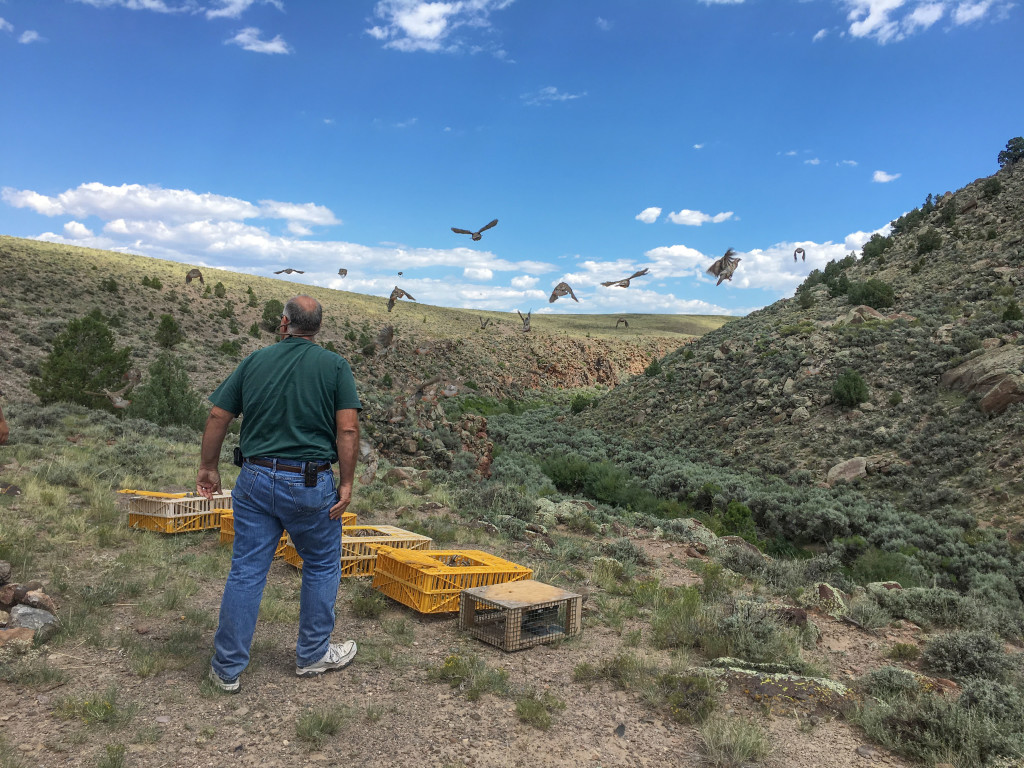
Watch a video of the release: sfw-chukar-release_2
SFW Names Troy Justensen President
North Salt Lake, UT • July 13, 2016 – Sportsmen for Fish & Wildlife (SFW) has named Troy Justensen President. He begins immediately overseeing day-to-day operations and management of the Utah-based non-profit wildlife conservation organization.

Justensen has been with SFW since 1994 when the sportsman’s group began organizing state and local chapters to raise funds and grassroots support for its mule deer recovery and elk expansion programs in Utah. He is a life-long outdoorsman and advocate for responsible, science-based wildlife management. He brings an understanding and love of wildlife, hunting and agriculture to the position.
“Mr. Justensen has been an important part of SFW from our beginning when he helped organize sportsmen who gathered on the steps of Utah’s capitol to express frustration with Utah’s then dwindling hunting opportunities,” said SFW Founder Don Peay. “He is a passionate warrior for sportsmen and conservation of wild places and wild things. His efforts and influence have been in play on the western wildlife front for more than two decades, and our membership can expect many additional and significant contributions from him in the future.”
Mr. Justensen has helped raise over $13 million for Utah wildlife alone – money that has been committed to on-the-ground projects to specifically benefit big game, upland game and fishery resources. Among his most recent accomplishments is an ongoing $360,000 SFW investment in a pheasant raising program designed to augment wild populations of the birds and give youth hunters throughout the state opportunity to experience pheasant hunting as he did as a young hunter.
Most recently Chairman of the SFW Fulfillment Committee, Justensen has successfully led a team of extremely dedicated hunters in the development and execution of a wide variety of programs and initiatives to protect and enhance wildlife populations.
“The success of SFW’s programs has been possible only through partnerships with local and state wildlife and land agencies, private landowner and livestock associations, and other non-profit wildlife organizations – partnerships Troy has helped foster and maintain on behalf of SFW,” said SFW Board Chairman Dave Woodhouse. “I have worked closely with him for fifteen years and have every confidence in his abilities to get things done for SFW and wildlife.”
Mr. Justensen will be responsible for ensuring the success and growth of SFW and it’s various programs, subsidiaries and ventures, including 17 local chapters, the annual Western Hunting and Conservation Expo, Arctic Red River Outfitters in the Northwest Territories of British Columbia and the Full Curl Society.
– • –
UPDATE: Utah Big Game Captures and Transplants
A Message to SFW from UDWR Big Game Program Coordinator Justin M Shannon
Here is a summary of the big game captures/transplants that took place this past fall/winter. Overall, we captured 1,276 big game animals this year.
I want to thank all of you who helped with the captures. Many of you contributed time, money, and efforts to make these captures happen, and we appreciate it. There is a lot of momentum in Utah’s big game program right now, and I believe it is because of the strong partnerships we have with sportsmen and our great biologists. I also want to thank Kent Hersey for taking the lead on organizing these projects, Brock and Randy from BYU for all the great research they are doing, Bill Bates and our Director’s Office for their continued support, and the project leaders and safety officers for carrying out the captures in a safe and professional manner.

This radio collared bighorn ewe was photographed near Moab, Utah in Arches National Park. Photo by Phil Douglass, Utah Division of Wildlife Resources
Bighorn Sheep – 142 animals
Disease profiling and monitoring
Zion – 16 animals
San Juan – 18 animals
Dirty Devil – 19 animals
Stansbury – 21 animals
Avintaquin – 7 animals
Transplants
12 sheep were transplanted from Zion to Pine Valley
49 sheep were transplanted from Antelope Island to Oak Creek

Mountain Goats – 21 animals were transplanted from Willard Peak to Mt Dutton
Bison – 15 bison were captured and disease tested on the Book Cliffs

The helicopter brings a captured bison to the handling area on the Henry Mountains. Photo taken 1-10-09 by Bill Bates, Utah Division of Wildlife Resources
Elk – 259 animals
189 elk (144 cows, 45 bulls) were captured as part of the Wasatch elk study
30 cow elk were captured in the Southern Region (10 on Southwest Desert, 10 on Panguitch Lake, and 10 on Beaver) to monitor movement patterns
6 collars were deployed on the San Juan Unit
34 animals from Park City to other portions of the Wasatch unit

Deer – 839 animals
Survival monitoring – 548
Pine Valley (40 does and 20 fawns in December, 23 does in March)
Wasatch/Manti (40 does and 20 fawns in December, 21 does in March)
Oquirrh-Stansbury (29 does and 20 fawns in December, 21 does in March)
Cache (40 does and 20 fawns in December, 21 does in March)
South Slope (21 does and 20 fawns in December, 13 does in March)
San Juan (41 does and 20 fawns in December, 26 does in March)
Monroe (30 does and 20 fawns in December, 20 does in March)
Vernon (22 does captured to monitor migration patterns)
Urban deer – 291 animals
94 animals from Bountiful to Big Wash
93 animals from Bountiful to Raft River
69 animals from Bountiful to the southeast Manti
2 animals from Bountiful to East Canyon WMA
32 animals from Herriman to southeast Manti
1 animal from Herriman to East Canyon WMA
—
Justin M Shannon
Big Game Program Coordinator
Utah Division of Wildlife Resources
Words on Wildlife – May 2016
Commentary
One of SFW’s most defining characteristics – an aspect that so clearly sets SFW apart from all other wildlife conservation organizations – is that SFW’s mission works to benefit not just a single species but multiple big game species across our Utah landscapes. Many of the projects SFW has funded and provided volunteers for in recent years are showing significant, measurable and important results for deer, elk, moose, bighorns, mountain goats, bison and other species.

Habitat improvement is one of SFW’s primary areas of focus and investment. Each year as much as $1.2 million in SFW conservation funds are spent on projects across the state of Utah. Everything from reseeding burned habitat and removing pinion-juniper to chaining of unproductive lands and planting sagebrush seedlings is on the list. Conservation funding isn’t the only thing SFW puts on the ground. SFW members also show up with gloves, shovels, machinery and other materials volunteering time and resources to make a difference for big game.
Predator control of coyotes and cougars in the state spearheaded by SFW is yielding impressive results, specifically for Mule deer and Bighorn sheep. Mule deer fawn survival is booming on many units where coyote control efforts have been unleashed over the past five years. Wild sheep transplants are successful only when cougars are managed to levels that allow wild sheep to flourish in new areas.
SFW’s Pheasant Program, which is now in its fourth year, is helping address a 25-year downward trend in Utah’s declining pheasant populations. SFW has secured ongoing funding for raising and releasing tens of thousands of pheasants for public hunters on WMA and Walk-In-Access properties in the several regions of the state. Not only are new young hunters now enjoying the opportunity to see and shoot pheasants again, Utah’s wild bird populations are being augmented thanks to our members’ efforts and SFW’s financial support.
One of the most high profile of SFW’s projects has been the ground-breaking and now proven successful deer transplants conducted first on the Parowan Front in southern Utah and currently in northern Utah’s Wasatch Front residential communities. Interest in capturing and transplanting overpopulating mule deer started among SFW’s Beaver and Iron county chapter leadership nearly 10 years ago. Despite negativity and resistance among many, we proudly stamp our mark on this uniquely SFW project that is now being duplicated in a few neighboring states.The Utah Moose Health and Reproduction Study conducted by USU Graduate Student Joel Ruprecht is yet another of the diverse projects SFW is solidly behind. The study has been ongoing for the past four years and is funded and supported by SFW and its membership. This project has been the key in determining causes for recent declines in the North Slope Uintas and Wasatch Mountains moose populations. SFW has made a difference by ensuring the best science and biology is being applied in efforts to correct the decline.

Utah’s exploding Bighorn sheep populations would not be what they are today without SFW and our partner organization Utah Foundation for North American Wild Sheep (UFNAWS). Major investments in capture/transplants, paying for Bighorn sheep research and habitat studies, building water catchments as well as purchasing wild sheep from other western states, all with SFW conservation funds, has been the critical component to Utah’s status as the state with the most aggressive and successful wild sheep program in west.
As we look back on 2015 as the best deer hunt in recent memory, and with additional mountain goat and wild sheep populations established, as well as the hundreds of thousands of acres of improved and restored habitat in Utah, we do so knowing the significant role SFW and its members have played in these successes. It has taken more than a decade of investment, sacrifice and leadership to produce results that Utah and those who hunt hear enjoy. Now let’s keep up the fight and continue building a bright future for hunters and our wildlife.

