Archives: Habitat Improvement
SFW Commits $882,000 for Wildlife Conservation Projects in 2020
Sportsmen for Fish and Wildlife (SFW) has committed $882,056 in 2020 big game captures and transplants, research studies, habitat and watershed improvement projects, and other projects that will benefit big game species throughout Utah. SFW’s funding of these projects comes from two sources:
1. Utah Conservation Permit funds raised through SFW’s live auctions at the Western Hunting and Conservation Expo and its 17 fundraising events held throughout Utah in 2018 and 2019.
2. $5 Application Revenue from the Western Hunting & Conservation Expo during the 2018 and 2019 Expo events.
Read the entire report here >>
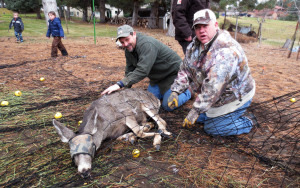
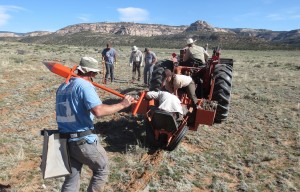
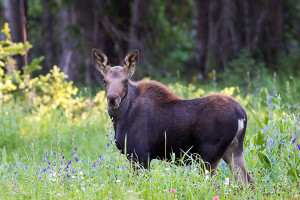
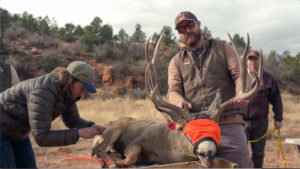
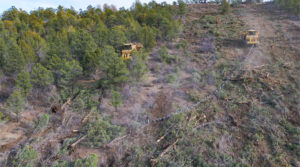
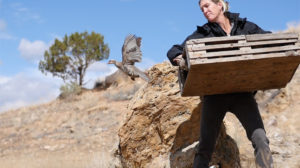
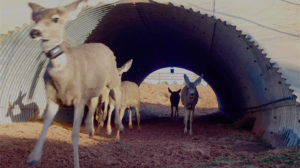
What’s SFW been up to lately? Watch, and see.
SFW has spent the last 12 months raising money for wildlife and putting it to use in partnership with the Utah Division of Wildlife Resources on the ground, across the state, and for multiple species in Utah. All sportsmen and all wildlife benefit.
A Message from the President
Re: Utah’s Award of 200 Expo Tags to SFW
To Our Valued Members,
As you might be aware, there has recently been much said about SFW on public forums and social media outlets since we were named the successful bidder of Utah’s 200 Tag Expo contract. Unfortunately much of what is being said is being grossly misinterpreted and twisted. As a result I thought it would be beneficial to set the record straight.
It is my hope that you will form your own opinion, based on our conservation record and facts, rather than be wrongly influenced by the falsehoods and negativity you might be hearing.
To grow big bucks, bulls, rams and billies in your backyard requires much more than sprinkling just a few dollars into a handful of projects. Books upon books could be written about what SFW has accomplished in this state. Nearly 150 pages of it were recently compiled in SFW’s winning bid proposal for Utah’s 200 Tag Expo contract. I strongly encourage everyone to please read why the state of Utah selected SFW’s and MDF’s proposal.

I’ve been in my position for a relatively short time, just over one year now. During that time I have been incredibly impressed with the quality of individuals that make up SFW’s membership. I have also been equally impressed with our small but strong leadership and administrative team and all we are able to accomplish to push our mission forward with such limited resources. That being said, I’d like to answer some questions that some may ask regarding SFW funds.
- The funds generated from both the 200 Expo tags as well as the conservation permits auctioned at SFW fundraising banquets across the state are absolutely and without question used for conservation purposes here in Utah.
- SFW owns two hunting concessions in the Northwest Territories and British Columbia, Arctic Red River Outfitters and Full Curl Stone, respectively. Both concessions were 100% acquired through targeted donations by a very generous and longtime SFW supporter. The purpose in these areas being donated to SFW was to generate annual profits to support Utah’s conservation mission and to provide numerous world-class hunts in both auctions and drawings at the Hunt Expo. Additionally, we have annually provided a few of these hunts to some very deserving veterans. Furthermore, these sheep units are run independently of SFW’s Utah conservation operations.
- Regarding conservation dollars: During the 2015 season SFW raised $1,508,650 through auctioning Utah conservation permits. Of those funds $452,595 (30%) was given to the state of Utah (DWR) in September 2015, which follows Administrative Rule R657-4. Also according to the rule, 60% of that total is held in a federally insured bank account for a period of two years and is earmarked for projects that encompass the Watershed Restoration Initiative (WRI). WRI project include transplants of numerous species, population surveys, disease studies, deer transplant, predation and survival studies, and more. Any remaining funds left over at the end of the two-year period are surrendered to the Utah DWR to be used for future projects.
By rule, SFW and the other conservation organizations (seven in total) are allowed to retain 10% of the total amount raised, which in SFW’s case in 2015 was $150,865; and is used for administrative expenses. However, SFW uses these funds for conservation as well. SFW is a business and operates as a business. We currently employ a small staff of five, and there are expenses that must be covered. What many do not know is that for 15 years SFW operated from the basements, trucks and garages of a handful of founding members in order to preserve funds for our conservation mission. Today our team of five operates out of a very modest office/warehouse in North Salt Lake.
We make it a point to attend every RAC and Utah Wildlife Board meeting, numerous federal and state land management planning meetings, numerous species unit management planning meetings, and many other activities required to grow herd numbers and quality big game in Utah. These meetings are not conveniently located but rather, they are regionally spread across the state. This requires travel and time on the road to ensure SFW remains relevant and its members have an active voice as it relates to the best interest of our wildlife here in Utah.
I personally attended several relocation projects in 2015 getting my hands dirty, including sage brush plantings to help restore badly needed mule deer winter range. Just a few weeks ago I spent seven hours in a vehicle driving a load of recently captured urban mule deer from Bountiful to be released in the Uintah Basin. Not only did SFW supply the very funding for this project, we also partnered with Brigham Young University and covered all expenses related to ensuring that the science behind the relocation was sound. The list of projects goes on and on and includes projects for multiple species in our state.
The Expo funds help pave the way for everything outlined above. It is my hope that everyone will read SFW’s and MDF’s proposal and see for yourself why the state chose to go with proven contributors to Utah’s wildlife rather than an out-of-state organization.
It saddens me that there are individuals who do not see the great benefit that our organization brings to Utah, its wildlife and wild places but rather try to tear us down. It is unfortunate that so much negative energy is spent in this regard rather than being a part of something so worthy. It is my hope that we all will continue to rally for all conservation efforts in our amazing state regardless of what organization is doing the work. There are enough anti groups out there trying to tear all of us down. I am a firm believer there is strength in numbers and with the passion of our sportsmen in this state we can accomplish great things for Utah’s wildlife.
Sincerely,
Jon Larson
SFW President and CEO
High Elevation Habitat Restoration
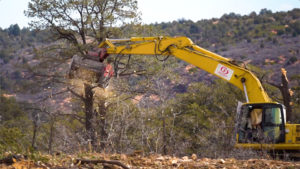
The state of Utah with SFW’s help has restored more than 1 million acres of pinion and juniper habitat, primarily critical winter range areas that deer and elk rely on for survival. Deer herds in particular are responding well.

At the higher elevation, those above 8,500 feet, conifer trees, like pinion juniper, have reduced the best deer and elk habitat stands. Deer and elk rely on these stands to fatten up during the summer months prior to migrating to lower wintering elevations. This reduction in high elevation habitat has two negative impacts: 1) Deer go into the winter with much lower percentages of body fat, 2) Some in the Forest Service, and a study at Utah State co-opted by anti-hunters, are recommending dramatic reductions in elk populations in order to allow regeneration, after conifer removal.
Avid SFW member Mike Siaperas and the DWR have treated approximately 400 acres by removing dense conifer stands. The resulting regeneration is nothing short of amazing. These on-the-ground projects are proving that habitat can be successfully restored with proper removal of former stands of old, dense conifer stands. Even in the presence of high concentrations of elk and deer, these projects are proving successful. SFW and the DWR are working on ground breaking, on-the-ground regeneration—ground breaking in terms of the financial investment and in the application.


Large-scale regeneration projects on our great public lands over the next 10 years will allow for increased elk and deer populations across Utah. But it will take money and hard work to overcome the many oppositions, mostly created by anti-wildlife interests, to restore populations that will protect our elk and deer herds. SFW was the catalyst that sparked Utah’s winter range habitat restoration effort some 10 years ago. SFW is once again leading the effort to enhance a million acres of high elevation habitat. These projects will allow for abundant herds for generations to come.

Big Game Management at 9,979 Feet
 The SFW Cache Team just returned from a high country ride to evaluate big game summer range conditions in remote parts of the Cache National Forest. SFW rode with Utah Division of Wildlife (DWR) big game personnel to an elevation of 9,979 feet to get a first-hand, up close look at range conditions.
 The purpose of the ride was to assess range conditions for existing Mule Deer and Elk in this high country region of northern Utah. Jason Lundahl and Steve Sorensen requested the assessment on behalf of SFW and arranged details and logistics of the ride.
“There’s a real benefit to having SFW members on the ground with DWR personnel on projects like this,” Lundahl said. “Some of the most important wildlife and habitat projects in Utah’s history have started in ways like this, on horseback and in the backcountry. This remote wilderness area is high quality big game summer habitat. We are very encouraged about the possibilities it holds for greater numbers of trophy deer, goats and elk in the near future.”
 In the group photo standing on top of the mountain from left to right is DWR Big Game Coordinator Justin Shannon, SFW Cache Member Steve Sorensen, DWR Northern Region Big Game Biologist and Assistant Wildlife Manager Darren Debloois, and SFW Cache Committee Chair Jason Lundahl. Photo courtesy of Jeff Lundahl.

SFW Instrumental in Mule Deer Transplant Project
51 doe deer along the Parowan Front (the wildlife management area by Summit, Utah just north of Cedar City, Utah) were captured January 7-8, 2013 and translocated to the Fillmore WMA east of Holden, Utah. 50 female deer at the Holden site were also collared as a control group for the 3 year study on this particular translocation. This historic project is a joint effort between the Utah Division of Wildlife, BYU, and Sportsmen for Fish and Wildlife, and it’s one of the first studies of its kind to more closely gauge how the timing of the translocation of the deer affects the survival and strength of the herd.
These deer were selected due to concerns by the Utah Division of Wildlife biologists that the winter range along the Parowan Front was being overrun with too many deer and greatly negatively impacting the habitat and ability for winter range recovery.
The deer were captured, hobbled, blindfolded, and flown by helicopter to key staging areas north of Cedar City. The deer were then weighed, tested for disease, and measured for body fat and overall health by DWR, BYU and SFW volunteers. They were then collared and driven by trailer to the WMA east of Holden, where they were released.
Another translocation of 50 female deer from the Parowan Front to east of Holden will take place in March. The translocated deer will be monitored for 3 years. BYU researchers want to see if differences in transplanting times of the deer determine how effectively they will survive. SFW will donate over $240,000 over the next three years to help fund the study.
SFW would like to thank the teams from the Southern Region and Salt Lake City DWR offices, BYU and the local SFW committee for making all of this possible.
SFW Reports Results of Out-of-pocket Contributions to Wildlife
We are proud to report that Sportsmen for Fish & Wildlife continues its record of contributions and generosity for
wildlife in America:
- SFW is #1 in conservation dollars in the last reporting year;
- SFW is #1 in conservation dollars raised in last 10 years ($7.2 Million);
- SFW has invested $1,362,345 in wildlife, habitat and mission-related activities from 2008 to 2012; and,
- This $1.36 million of out-of-pocket contributions are not “conservation permit” dollars.
SFW played a key role working with Utah Division of Wildlife Director Keven Conway in changing policies and establishing programs to start the Utah Watershed Initiative. SFW leveraged these dollar and played a key role in obtaining tens of millions in matching dollars – the $70 Million watershed project Director Karpowitz recently commented on.
All of this is a clear testament to the dedication and hard work of SFW’s volunteers and professionals. We thank them, each and every one, for the personal sacrifices of time, money, equipment and expertise in making SFW a leading conservation group that fights passionately for the future of wildlife in Utah and America.
We have updated our website to make some of this financial information more readily available. For more information visit http://www.sfw.net/your-money/.
SFW is pleased that these contributions makes Utah’s aggressive habitat restoration efforts possible. The state of Utah and other conservation partners are producing results by working together for the future of conservation. We will continue not only our dedication to restoration of wildlife populations through habitat improvement, but also in protecting wildlife by fencing of highways, responsible predator management, resolving wildlife conflicts and finding ways to augment wildlife in Utah. Please contact us directly if you have questions or comments.
About SFW: (www.SFW.net) Headquartered in North Salt Lake, Utah, SFW is a charitable, non-profit 501(c)(3) organization. The mission of SFW is to promote the protection and enhancement of wildlife habitat, assist in providing quality wildlife management programs, educating the public about the role hunters play in wildlife conservation, and perpetuating the family tradition of hunting and fishing. Phone: (801) 936-1386.
✭ ✭ ✭
RMEF Critique of “Special Permits” Draws Response from Utah DWR
RMEF Calls for Transparency on State Special Big Game Permits (read more …)
Utah Division of Wildlife letter to RMEF points out concerns about critical comments (read more…)
SFW Helps Raise $1.3 Million for Utah’s Wildlife
* * * * A PRESS RELEASE ISSUED BY THE UTAH DIVISION OF WILDLIFE RESOURCES * * * *
Salt Lake City — Utah’s wildlife received a $1.3 million gift recently. The gift came courtesy of Utah’s conservation permit program. Here’s how the program works:
- The Division of Wildlife Resources allocates a small number of big game, black bear, cougar and turkey hunting permits to conservation organizations in Utah.
- The groups auction the permits at their yearly banquets.
- After auctioning the permits, at least 90 percent of the money the groups raise must be used on DWR-approved projects that benefit Utah’s wildlife.


$1.3 million
Seven groups received conservation permits in 2011: Sportsmen for Fish and Wildlife, the Mule Deer Foundation, the Wild Sheep Foundation, the Rocky Mountain Elk Foundation, Safari Club International, the National Wild Turkey Federation and the Utah Bowman’s Association.
On April 11, representatives from the seven groups met with DWR biologists to decide which projects the money would be used to fund. A total of 66 projects received more than $1.3 million in funding.
Mike Canning, Habitat Section chief for the DWR, says allowing these groups to auction the permits is a windfall for Utah’s wildlife. “The amount of money that ends up going into on-the-ground work to help wildlife across Utah is astounding,” he says.
Canning gives some examples of how conservation permit funds are used:
- Much of the money the conservation permit program generates each year funds habitat projects that are part of Utah’s Watershed Restoration Initiative.
The initiative started in 2005. Since it began, more than $76 million has been used to restore more than 778,000 acres of wildlife habitat across the state.
The conservation permit program provided more than $5.4 million of the $76 million.
“Our goal is to restore at least 100,000 acres a year so we’re providing Utah’s wildlife with the food, cover and other habitat items the wildlife need,” Canning says.
- To transplant bighorn sheep.
- To survey Utah’s elk herds from the air.
- To conduct research projects, such as determining why the growth of Utah’s moose population has slowed in recent years.
- To build more water collection devices called “guzzlers.”
- Guzzlers provide additional water to wildlife species in some of Utah’s driest areas.
- To learn more about the best ways to construct wildlife-crossing structures. These structures are vital in helping deer and other wildlife safely cross some of Utah’s most heavily traveled roads.
# # #
PHOTOS – 15 photos to accompany this story are available at http://huntdatabase.com/utah/newsphotos/index.php?gazpart=show&gazgal=226.
Contact: Mark Hadley, DWR Relations with the Public Specialist (801) 538-4737
SFW Donates $609,000 to Wildlife
 SFW’s Fulfillment Board donates $609K to Utah Division of Wildlife Resources for 65 Wildlife Habitat Improvement Projects completed in fiscal year 2011. These projects consist of habitat enhancement, water projects, highway mortality studies/fencing, mule deer and bison studies. These projects were done throughout all five regions in Utah.

