Archives: SFW News
SFW Opposes President Obama’s Bears Ears Monument Designation

Fellow SFW Members,
Over the last 30 years, we sportsmen have worked hard alongside the Utah Division of Wildlife to restore populations of elk, desert bighorn sheep, mule deer, wild turkey, black bear, cougar and other species in the region now encompassed by the newly designated Bears Ears Monument. These game species are now thriving and provide some of the highest quality hunting opportunities found in all of North America.
The creation of this monument was dictated by lame duck President Obama as he vacationed in Hawaii and is a prime example of why the majority of the people in 3,081 counties across America voted for Donald Trump while only a mere 300 counties voted for Hillary Clinton. Listen to the voice of the local people who love, make a living from and care so personally for the lands and natural resources in our own back yard – far more so than any outsider groups funded in LA or New York. And for the few who might still wonder why Donald Trump, Jr. was asked to speak at the 2016 Western Hunting and Conservation Expo – need more be said?
SFW recognizes the designation of the Bears Ears Monument as a serious threat to Utahns’ and the native people of the region’s way of life and ability to live and pursue traditions that have been enjoyed by their ancestors for centuries.
SFW and its Founder Don Peay will work with Utah Governor Herbert, the entire Utah delegation, the Trump Administration, Big Game Forever and other sportsmen networks across America to do all that is possible to reverse and/or limit the effects of the Bears Ears Monument, including:
- Reverse the designation and maintain the lands as “multiple use”
- Dramatically reduce the acreage in official monument designations
- Ensure that wildlife habitat restoration, state wildlife management of all species, including transplants and predator control, and hunting and fishing and trapping are protected as part of this unique place thus protecting sportsmen dollars that have been the catalyst for restoring the region to its current magnificent condition.
We will work until we achieve the best possible for sportsmen and all Utahns! Stay tuned for updates in early 2017.

SFW Puts Chukar on Utah’s Mountains
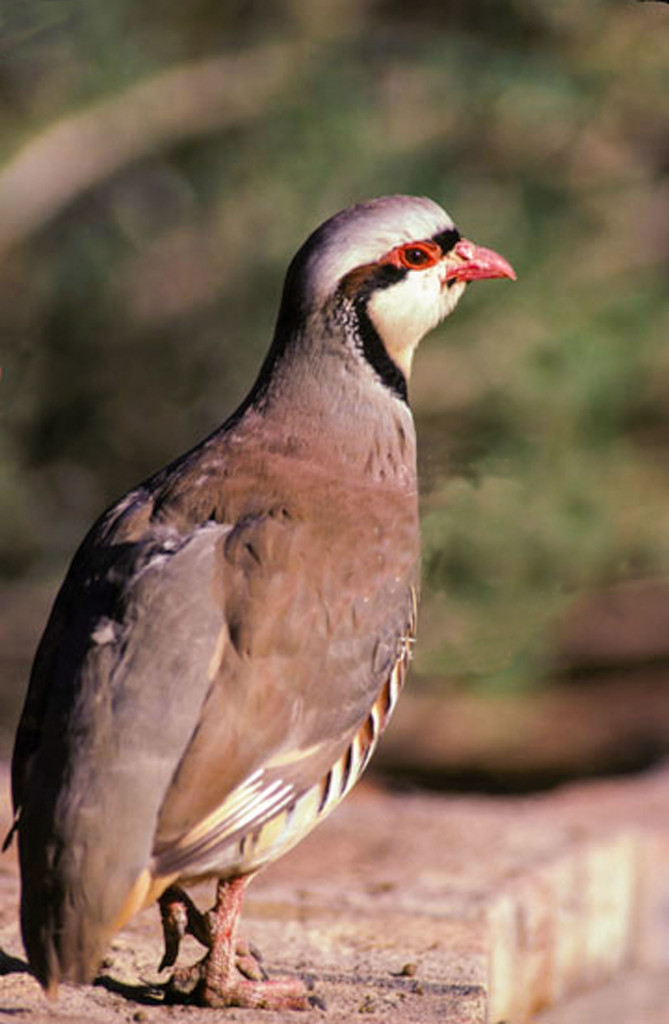
SFW purchased 2,100 Chukars chicks in 2016 and raised them to adults. Several hundred were recently released in Sevier County and surrounding areas. Some were released in Black Canyon, some at Manning Creek near the Elbow T Ranch southeast of Marysvale, and others at a site in the Breaks on Poverty Flat southwest of Monroe, Utah. More birds will be released ahead of the statewide youth pheasant, waterfowl and pheasant hunt day September 17th. Many thanks to Paul Niemeyer, DeLoss Christensen, Jake Albrecht and the SFW Sevier County Chapter team for all of their hard work with SFW’s Chukar and Pheasant programs.
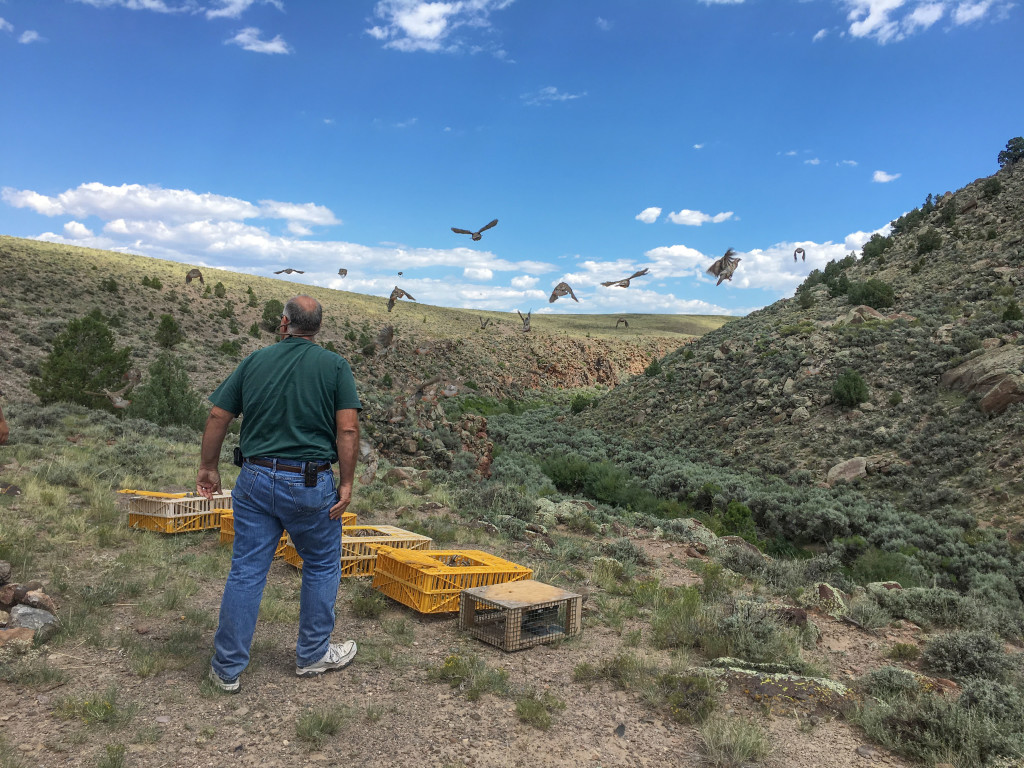
Watch a video of the release: sfw-chukar-release_2
Official Statement on the Proposed Bears Ears Monument in Southeastern Utah
Sportsmen for Fish & Wildlife (SFW) strongly opposes the proposed creation of the 1.9 million-acre Bears Ears Monument in southeastern Utah. We recognize the proposed monument as a serious threat to Utahns’ and the native people of the region’s way of life and ability to live and pursue traditions that have been enjoyed by their ancestors for centuries.
SFW fears that this monument would take control and management of the land from locals and natives, who use it everyday and rely on it for their livelihood, and turn it over to the federal government thereby prohibiting the gathering of food, hunting, wood cutting and other important activities.
SFW feels that such an expansive designation would have negative affects on the wildlife and habitat that is critical to big game survival in the region. The creation of a national monument would severely threaten the expansion of wildlife and rehabilitation of healthy habitat that sportsmen and the state of Utah have invested millions of dollars building in recent decades.
SFW agrees with the beliefs of many members of the Hopi, Navaho and Ute Indian Tribes of San Juan County, who live adjacent to the Bears Ears, that a monument designation would put the Bears Ears at greater risk than ever before and that designating a monument under the Antiquities Act as a means of protecting archaeological and sacred sites of southeastern Utah is wrong.
SFW’s opposition to the proposed Bears Ears Monument is shared by the vast majority of Utah residents, according to a recent Dan Jones & Associates poll conducted for UtahPolicy.com, which found that only 17 percent of Utahns are in favor of President Obama creating the monument.
SFW calls on U.S. Interior Secretary Sally Jewel and President Barack Obama to take these points into serious consideration. We are hopeful that President Obama will show restraint and forego taking Executive Action to create another monument in the region.
Sign the online petition to let the White House know you are also opposed to a new monument.
— • —
SFW Names Troy Justensen President
North Salt Lake, UT • July 13, 2016 – Sportsmen for Fish & Wildlife (SFW) has named Troy Justensen President. He begins immediately overseeing day-to-day operations and management of the Utah-based non-profit wildlife conservation organization.

Justensen has been with SFW since 1994 when the sportsman’s group began organizing state and local chapters to raise funds and grassroots support for its mule deer recovery and elk expansion programs in Utah. He is a life-long outdoorsman and advocate for responsible, science-based wildlife management. He brings an understanding and love of wildlife, hunting and agriculture to the position.
“Mr. Justensen has been an important part of SFW from our beginning when he helped organize sportsmen who gathered on the steps of Utah’s capitol to express frustration with Utah’s then dwindling hunting opportunities,” said SFW Founder Don Peay. “He is a passionate warrior for sportsmen and conservation of wild places and wild things. His efforts and influence have been in play on the western wildlife front for more than two decades, and our membership can expect many additional and significant contributions from him in the future.”
Mr. Justensen has helped raise over $13 million for Utah wildlife alone – money that has been committed to on-the-ground projects to specifically benefit big game, upland game and fishery resources. Among his most recent accomplishments is an ongoing $360,000 SFW investment in a pheasant raising program designed to augment wild populations of the birds and give youth hunters throughout the state opportunity to experience pheasant hunting as he did as a young hunter.
Most recently Chairman of the SFW Fulfillment Committee, Justensen has successfully led a team of extremely dedicated hunters in the development and execution of a wide variety of programs and initiatives to protect and enhance wildlife populations.
“The success of SFW’s programs has been possible only through partnerships with local and state wildlife and land agencies, private landowner and livestock associations, and other non-profit wildlife organizations – partnerships Troy has helped foster and maintain on behalf of SFW,” said SFW Board Chairman Dave Woodhouse. “I have worked closely with him for fifteen years and have every confidence in his abilities to get things done for SFW and wildlife.”
Mr. Justensen will be responsible for ensuring the success and growth of SFW and it’s various programs, subsidiaries and ventures, including 17 local chapters, the annual Western Hunting and Conservation Expo, Arctic Red River Outfitters in the Northwest Territories of British Columbia and the Full Curl Society.
– • –
SFW Welcomes Oz and Tig of “13 Hours: Benghazi”
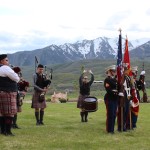
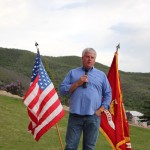
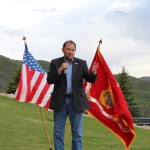
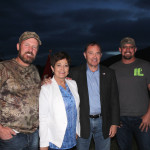
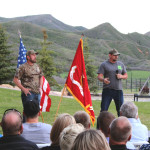
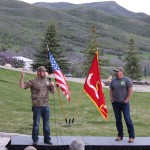
Two of the six Secret Soldiers of Benghazi, Mark “Oz” Geist and John “Tig” Tiegen, joined SFW, Utah Governor Gary Herbert and Hunts for the Brave on May 14th for a very special evening honoring America’s war veterans and remembering the truth behind the movie “13 Hours”.
It was incredible to hear first-hand about the challenges they faced the details of exactly how Ambassador Chris Stevens died and how they felt they could have saved him if they would have been given permission to go when it all started. Oz rehearsed the injuries he suffered in the battle and being on the roof that took the lives of two soldiers, He also replayed the emotion experienced in the aftermath.
These men were told to stand down by those in command while Americans were being killed. They ignored that command and fought for many lives, including their own. Oz and Tig are incredible men, true patriots and great American heroes. The unmatched scenery of the South Wasatch Back from the beautiful home of Tom Mower made the perfect setting for an unforgettable event.

UPDATE: Utah Big Game Captures and Transplants
A Message to SFW from UDWR Big Game Program Coordinator Justin M Shannon
Here is a summary of the big game captures/transplants that took place this past fall/winter. Overall, we captured 1,276 big game animals this year.
I want to thank all of you who helped with the captures. Many of you contributed time, money, and efforts to make these captures happen, and we appreciate it. There is a lot of momentum in Utah’s big game program right now, and I believe it is because of the strong partnerships we have with sportsmen and our great biologists. I also want to thank Kent Hersey for taking the lead on organizing these projects, Brock and Randy from BYU for all the great research they are doing, Bill Bates and our Director’s Office for their continued support, and the project leaders and safety officers for carrying out the captures in a safe and professional manner.

This radio collared bighorn ewe was photographed near Moab, Utah in Arches National Park. Photo by Phil Douglass, Utah Division of Wildlife Resources
Bighorn Sheep – 142 animals
Disease profiling and monitoring
Zion – 16 animals
San Juan – 18 animals
Dirty Devil – 19 animals
Stansbury – 21 animals
Avintaquin – 7 animals
Transplants
12 sheep were transplanted from Zion to Pine Valley
49 sheep were transplanted from Antelope Island to Oak Creek

Mountain Goats – 21 animals were transplanted from Willard Peak to Mt Dutton
Bison – 15 bison were captured and disease tested on the Book Cliffs

The helicopter brings a captured bison to the handling area on the Henry Mountains. Photo taken 1-10-09 by Bill Bates, Utah Division of Wildlife Resources
Elk – 259 animals
189 elk (144 cows, 45 bulls) were captured as part of the Wasatch elk study
30 cow elk were captured in the Southern Region (10 on Southwest Desert, 10 on Panguitch Lake, and 10 on Beaver) to monitor movement patterns
6 collars were deployed on the San Juan Unit
34 animals from Park City to other portions of the Wasatch unit

Deer – 839 animals
Survival monitoring – 548
Pine Valley (40 does and 20 fawns in December, 23 does in March)
Wasatch/Manti (40 does and 20 fawns in December, 21 does in March)
Oquirrh-Stansbury (29 does and 20 fawns in December, 21 does in March)
Cache (40 does and 20 fawns in December, 21 does in March)
South Slope (21 does and 20 fawns in December, 13 does in March)
San Juan (41 does and 20 fawns in December, 26 does in March)
Monroe (30 does and 20 fawns in December, 20 does in March)
Vernon (22 does captured to monitor migration patterns)
Urban deer – 291 animals
94 animals from Bountiful to Big Wash
93 animals from Bountiful to Raft River
69 animals from Bountiful to the southeast Manti
2 animals from Bountiful to East Canyon WMA
32 animals from Herriman to southeast Manti
1 animal from Herriman to East Canyon WMA
—
Justin M Shannon
Big Game Program Coordinator
Utah Division of Wildlife Resources
Words on Wildlife – May 2016
Commentary
One of SFW’s most defining characteristics – an aspect that so clearly sets SFW apart from all other wildlife conservation organizations – is that SFW’s mission works to benefit not just a single species but multiple big game species across our Utah landscapes. Many of the projects SFW has funded and provided volunteers for in recent years are showing significant, measurable and important results for deer, elk, moose, bighorns, mountain goats, bison and other species.

Habitat improvement is one of SFW’s primary areas of focus and investment. Each year as much as $1.2 million in SFW conservation funds are spent on projects across the state of Utah. Everything from reseeding burned habitat and removing pinion-juniper to chaining of unproductive lands and planting sagebrush seedlings is on the list. Conservation funding isn’t the only thing SFW puts on the ground. SFW members also show up with gloves, shovels, machinery and other materials volunteering time and resources to make a difference for big game.
Predator control of coyotes and cougars in the state spearheaded by SFW is yielding impressive results, specifically for Mule deer and Bighorn sheep. Mule deer fawn survival is booming on many units where coyote control efforts have been unleashed over the past five years. Wild sheep transplants are successful only when cougars are managed to levels that allow wild sheep to flourish in new areas.
SFW’s Pheasant Program, which is now in its fourth year, is helping address a 25-year downward trend in Utah’s declining pheasant populations. SFW has secured ongoing funding for raising and releasing tens of thousands of pheasants for public hunters on WMA and Walk-In-Access properties in the several regions of the state. Not only are new young hunters now enjoying the opportunity to see and shoot pheasants again, Utah’s wild bird populations are being augmented thanks to our members’ efforts and SFW’s financial support.
One of the most high profile of SFW’s projects has been the ground-breaking and now proven successful deer transplants conducted first on the Parowan Front in southern Utah and currently in northern Utah’s Wasatch Front residential communities. Interest in capturing and transplanting overpopulating mule deer started among SFW’s Beaver and Iron county chapter leadership nearly 10 years ago. Despite negativity and resistance among many, we proudly stamp our mark on this uniquely SFW project that is now being duplicated in a few neighboring states.The Utah Moose Health and Reproduction Study conducted by USU Graduate Student Joel Ruprecht is yet another of the diverse projects SFW is solidly behind. The study has been ongoing for the past four years and is funded and supported by SFW and its membership. This project has been the key in determining causes for recent declines in the North Slope Uintas and Wasatch Mountains moose populations. SFW has made a difference by ensuring the best science and biology is being applied in efforts to correct the decline.

Utah’s exploding Bighorn sheep populations would not be what they are today without SFW and our partner organization Utah Foundation for North American Wild Sheep (UFNAWS). Major investments in capture/transplants, paying for Bighorn sheep research and habitat studies, building water catchments as well as purchasing wild sheep from other western states, all with SFW conservation funds, has been the critical component to Utah’s status as the state with the most aggressive and successful wild sheep program in west.
As we look back on 2015 as the best deer hunt in recent memory, and with additional mountain goat and wild sheep populations established, as well as the hundreds of thousands of acres of improved and restored habitat in Utah, we do so knowing the significant role SFW and its members have played in these successes. It has taken more than a decade of investment, sacrifice and leadership to produce results that Utah and those who hunt hear enjoy. Now let’s keep up the fight and continue building a bright future for hunters and our wildlife.
Steppin’ Up for Luke
SFW’s Beaver Chapter and Phone Skope helped open a new chapter in the life a young hunter and friend. A dirt bike racing accident broke Luke Carter’s back and took the use of his legs. SFW and Phone Skope stepped up with a West Desert Antelope Hunt to help open a new chapter in Luke’s life. Watch the Phone Skope video and see.


Get Paid to Save Mule Deer
A unique program created by the Utah Division of Wildlife provides a one-of-a-kind opportunity for coyote hunters to help increase Utah’s Mule deer populations. An added benefit to the program is that successful hunters can also get paid handsomely for having fun in the field.
Utah initiated a unique predator-control program provides a cash incentive for any qualified hunter who wants to take coyotes. Participants in this program can receive $50 for each properly documented coyote that they kill in Utah. However, hunters hoping to cash in on the coyote bounty must pre-register for the program and follow through on a few simple rules.

Sen. Ralph Okerlund, a Republican from Monroe, Utah, sponsored the Mule Deer Preservation Act during the 2012 Legislative Session. The new law allocated the $50 bounty that is projected to help significantly reduce coyote populations, and thereby preventing the predation of potentially thousands of Mule deer annually.
“Our members have been behind Utah’s coyote bounty program since its beginning, and we’re excited to see the bounty has grown to fifty dollars per dog,” said SFW Coyote Specialist Bryce Pilling of Delta, Utah. “Some SFW members throughout the state spend more days hunting coyotes than they do hunting big game.”

The program’s popularity can also be measured by the number of people registered for the program, which continues to rise year after year, according to the DWR. The program is responsible for removing nearly 25,000 of the predators throughout the state.
“Coyotes occur in every corner of the state and are responsible for a large number of deer kills,” Pilling added. “Coyotes take deer year-round, but especially in the spring and early summer months. That’s why we encourage our members to hunt these predators all year long.”
SFW is greatly encouraged by the fact that Utah’s deer herds are on the rebound. Leadership at SFW meets regularly with the DWR to discuss the program and its effectiveness. SFW agrees with wildlife biologists and game managers that the state’s coyote bounty program is a key component to the long-term health and growth of deer populations state wide.
How does Utah’s Predator Control Program benefit mule deer?
Several key factors can affect mule deer survival and limit deer numbers, including the severity of weather and the amount of forage available during wintering months. In years with mild weather and high quality and quantity habitat is available, then removing predators is likely to increase fawn survival rates.
Register for the program.
If you are interested in participating, you must first complete an online training course. Registration is easy, and before you know it you can be making money while you simultaneously help save Utah’s deer.
Below is a list of required steps:
1) Complete the online training and registration course
2) Find coyote check-in locations and times
3) Download the Coyote Compensation Form
4) Review the statewide map (382 KB PDF)
5) Read the program report for 2015 online
6) Apply for the Targeted Predator Control Program
Learn more.
Learn how to register for the program, where to check your coyotes, and other details about Utah’s coyote bounty program here.
Common Q&A on Hunting Expo and Conservation Offered by DWR

The Utah Division of Wildlife Resources (DWR) has posted a list of common questions and answers about how the 200 Hunt Expo Permit Program contract was awarded to SFW and how the program works to benefit wildlife and the hunting public. This comes on the heels of wild accusations and much misinformation about both the program and the process of awarding the contract.
“Utah’s 200 Expo conservation permit program and the Western Hunting and Conservation Expo built by SFW and its partner the Mule Deer Foundation is unique and highly successful in delivering on-the-ground results for Utah big game,” said Jon Larson, SFW President and CEO. “There has recently been much said about SFW and the Hunting Expo on public forums and in social media in recent weeks. Unfortunately much of it is grossly misinterpreted and twisted.”
SFW has a policy of openness about how monies raised through the 200 Expo tags and Utah’s Conservation Permit Program are used. The Expo permit contract recently signed between SFW and the State of Utah clearly states that all of the money raised from expo permit application fees will be used specifically for “policies, programs, projects and personnel that support conservation initiatives in Utah.” SFW and MDF continue our commitment to annually disclosing how 100% of these funds are used to benefit Utah wildlife.
SFW is also encouraged by the straightforward and comprehensive nature of the DWR’s Q&A information and feels it will do much to address concerns of those seeking true and accurate information.

