Archives: SFW News
Big Game Management at 9,979 Feet
 The SFW Cache Team just returned from a high country ride to evaluate big game summer range conditions in remote parts of the Cache National Forest. SFW rode with Utah Division of Wildlife (DWR) big game personnel to an elevation of 9,979 feet to get a first-hand, up close look at range conditions.
 The purpose of the ride was to assess range conditions for existing Mule Deer and Elk in this high country region of northern Utah. Jason Lundahl and Steve Sorensen requested the assessment on behalf of SFW and arranged details and logistics of the ride.
“There’s a real benefit to having SFW members on the ground with DWR personnel on projects like this,” Lundahl said. “Some of the most important wildlife and habitat projects in Utah’s history have started in ways like this, on horseback and in the backcountry. This remote wilderness area is high quality big game summer habitat. We are very encouraged about the possibilities it holds for greater numbers of trophy deer, goats and elk in the near future.”
 In the group photo standing on top of the mountain from left to right is DWR Big Game Coordinator Justin Shannon, SFW Cache Member Steve Sorensen, DWR Northern Region Big Game Biologist and Assistant Wildlife Manager Darren Debloois, and SFW Cache Committee Chair Jason Lundahl. Photo courtesy of Jeff Lundahl.

Free Fishing Day
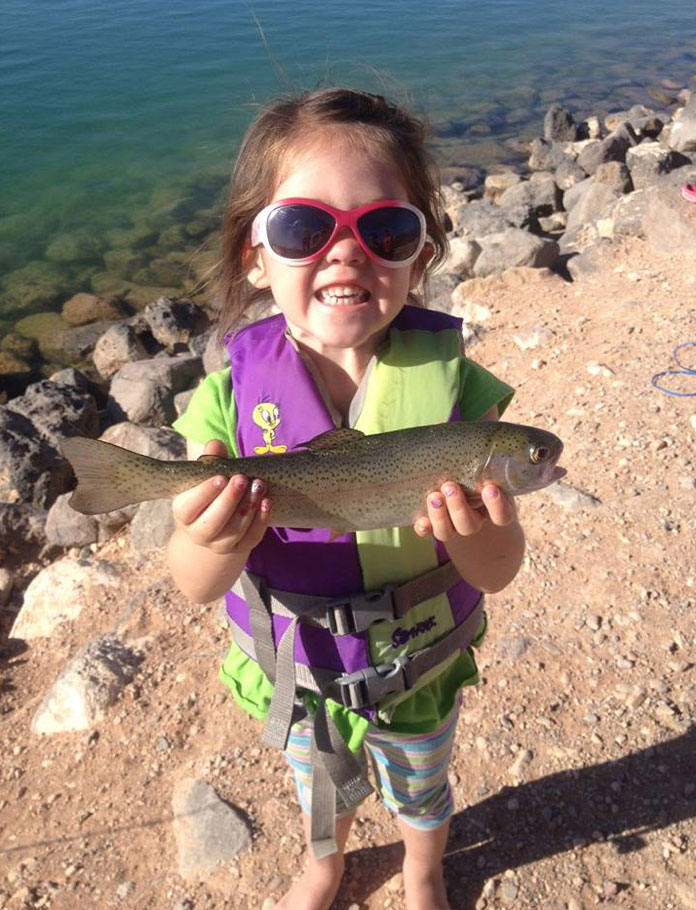 Free fishing day was June 7th, 2014 this year in Utah. SFW was spread out across the state helping the Utah DWR are various locations to help make this day memorable for many kids and adults alike! Remember to get out and take a kid fishing this summer!
San Juan Wildlife and Habitat Projects
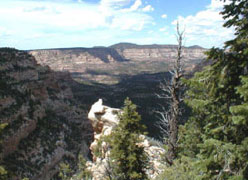 Sportsmen for Fish & Wildlife has committed $228,164 to fund large-scale wildlife and habitat improvement projects on the San Juan-Elk Ridge mountains that the conservation group has identified as “critical to local wildlife”. SFW funds will be put to use on Utah Division of Wildlife projects to improve habitat and feed conditions for deer and elk. Specifically, $141,164 will go to fund improvement projects in Beef Basin. An additional $87,000 will fund similar projects in Dark Canyon.
Utah DWR/USU Moose Study Report
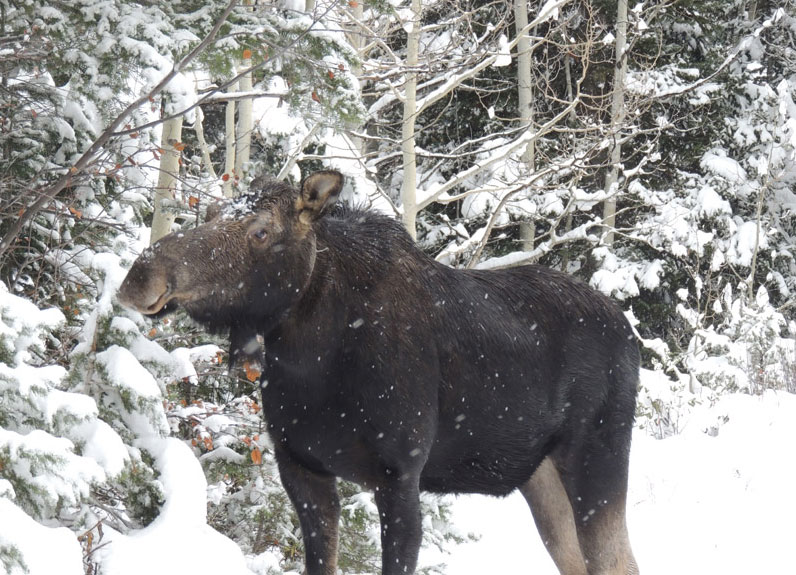 Anyone interested in Moose? Here’s an update the Utah Division of Wildlife Resources and Utah State University Moose Study from graduate student Joel Ruprecht. SFW invested a bunch of time, resources and funding for this project. Anyone interested in more about this study can attend Joel’s presentation at the Utah Wildlife Society (UTTWS) conference in St. George on March 20 or 21.
After a quiet winter with no mortalities of radio collared moose since November, two moose in the Wasatch Unit have died in the last two weeks near Tabby Mountain. The end of winter is hard on moose as their health is compromised after months without high quality forage, and fat reserves from summer foraging begin to run low. In addition, this time of year is when moose are most affected by winter ticks which can number in the tens of thousands on a single moose. The late winter moose deaths are not surprising as other moose studies have reported spikes in mortality during late winter. As spring arrives and plants begin to leaf out again, moose once again have access to nutritious forage and can begin restoring their lost fat reserves after the winter months. It is encouraging that no collared moose died between November and February, the longest period with no collared moose deaths since last winter when 120 adult female moose were collared. 100 collared moose still remain in the Wasatch and North Slope of the Uinta Mountains.
Last winter when moose were collared, biologists took a small blood sample. Among other things, the blood was assessed for nutritional content. Although not all results are in, it appears that moose in our sample are suffering from deficiencies in several micro nutrients including selenium, copper and zinc. Although animals only require these trace elements in very small quantities, when deficient they can impair the immune system and cause reproductive losses. We will continue to investigate the causes and consequences of these mineral deficiencies.
In the coming weeks, we will be conducting aerial surveys to determine calf survival of collared cows. Since calves have lower survival rates than adults, calf moose are not considered to have been added to the population until they survive their first winter. Thus, these surveys will give us valuable information on the current trend of Utah’s moose population.
Last year’s survival rate for adult female moose was ~85%. This is considered within the normal range of survival rates of moose rangewide. There was no difference in survival between the Wasatch and North Slope herds. Annual survival rates, as well as calving and calf survival rates, will continue to be studied until at least 2016. By the end of the study, we will have a solid understanding of the current status of Utah’s moose population with future population projections, as well as the causes of changes in moose numbers.
A number of collared moose have been difficult to locate during the winter due to them utilizing different habitats during winter, as well as the difficulty in accessing them this time of year. If anyone sees a radiocollared moose, if you could make note of its location and contact me at [email protected] or (208) 320-8713, it would help us out.
Sevier/Millard County Pheasants
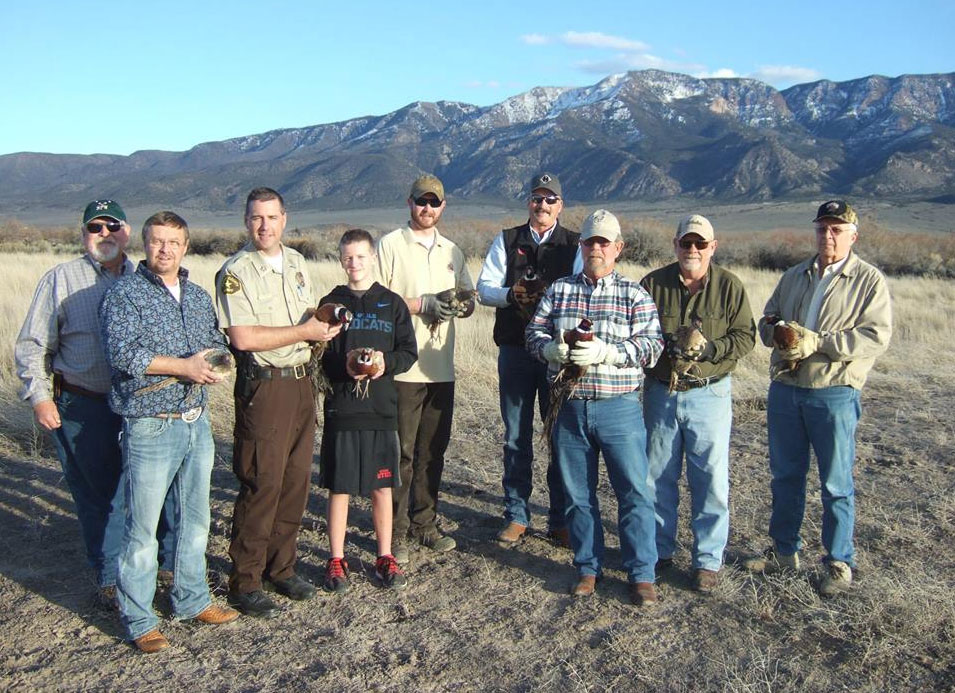 Sportsmen for Fish and Wildlife members have released 2,000 hen and 300 rooster pheasants in the last 3 weeks in Sevier, Wayne and Millard counties. This is just a portion of the birds we have released in the last couple of years in our area.
Sevier County County Commissioners and Sevier County Sheriff Nate Curtis, along with our local SFW Sevier/Wayne County committee members joined to help pass the night hunting law and bounty of foxes and racoons to give these birds a chance to survive.
These are the kind of projects that will ensure hunting opportunities for our kids and grand kids.
Nephi Chapter Banquet
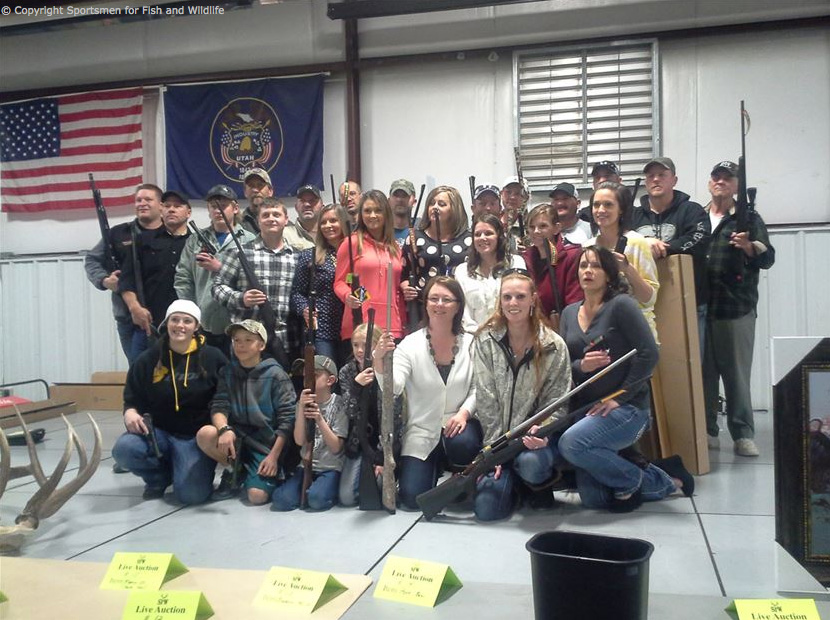 We had a great turn out at the Nephi Chapter Banquet on Saturday. Congratulations to the over 30 gun winners!
How do we fix Utah’s Mule deer herd? Big Dollars for Predator Control in Utah
By Ryan Benson
Two bills before Utah’s legislature aim to use sportsmen and public/private partnerships to address challenges in mule deer fawn survival. Under these bills, sportsmen will once again be the key to fixing Utah’s Mule Deer herd. These bills would place over $1 million dollars in bounties and other incentives for private coyote removal. The bill S.B. 87 is entitled, “Predator Control Funding” and is sponsored by Senator Hinkins. S.B. 87 places a $5 dollar surcharge on big game tags to raise money for coyote removal by trappers and hunters. It is estimated that this S.B. 87 surcharge will raise an additional $500-600,000 for predator control.
The other bill, S.B. 245, is entitled “Mule Deer Protection Act” and is sponsored by Senator Okerlund. This bill provides a $750,000 state general fund match to the sportsmen’s dollars provided by S.B. 87. $500,000 of the S.B. 245 dollars will go to DWR and $250,000 will go to Wildlife Services to help fund a new helicopter for predator control work aimed at fixing Utah’s Mule Deer herds. These bills are yet another illustration of how the state of Utah and hunters cooperatively are contributing dollars for mule deer restoration. Collectively, these two bills provide $1-$1.1 million dollars of ongoing funding to fix mule deer populations in Utah. Funding will also be directed to USDA Wildlife Services to augment existing removal efforts in mule deer fawning grounds.
Bounties in Utah
Currently 12 of 29 Utah counties provide bounties to private individuals for coyote removal. These bounties are typically $20 or $25 dollars per coyote and are administered in various ways in the different counties. We suggest that coyote bounties be increased to $50 dollars and be implemented statewide in a consistent fashion to incentivize greater efforts by hunters and trappers to take more coyotes. Let’s make sure these dollars are being spent on Utah coyotes. It will be the responsibility of concerned sportsmen to not only make sure these dollars are utilized, but to ensure that these dollars are used to fix Utah’s mule deer problem.
Federal Removal Efforts
Currently, USDA Wildlife Services removes approximately 4,500 coyotes statewide. This important program targets coyotes impacting agriculture and mule deer fawns. This program is administered in cooperation with the Utah Department of Agriculture and Utah DWR using almost $950,000 in private and state funds. At an estimated cost of up to $600 per coyote on mule deer areas, due to the cost of these control efforts, consistent removal is not provided annually in most problem areas. By providing funding for a second helicopter, existing control efforts can be increased and mule deer and agriculture control work can be performed on the same days in different areas.
The Value of Private Removal
Hunters and trappers remove 8,000 coyotes annually from Utah landscapes in addition to coyotes removed by USDA Wildlife Services. At a cost of $20-25 per coyote (or in many cases at no cost), sportsmen actually remove more coyotes in this state than by any other program. If greater incentive dollars are provided to cover costs associated with private removal work, our goal is that this greater funding for private efforts will allow sportsmen to spend more time and effort on coyote removal, especially in mule deer fawning areas. Let’s make it our goal to remove approximately 20,000 coyotes annually. Just as importantly, these bills recognize key role of sportsmen in maintaining predator/prey balances and provide economic help and incentives provide more consistent private efforts. With targeted efforts in mule deer impact areas, dramatic increases in fawn survival and reductions in overall mule deer mortality are aimed at growing Utah’s mule deer herd.
Predator Control Coordination
Utah DWR is also exploring the possibility of employing two full-time coyote removal specialists to help administer these programs and dollars for maximum impact for mule deer. These individuals would be tasked with focusing full-time on finding ways to use predator control to increase mule deer fawn survival and overall population growth. Additionally, the specialists would be tasked with helping direct the effort of sportsmen to provide the greatest value to mule deer recovery. These specialists would also work to ensure that trouble areas are being targeted every year and to minimize overlap with the efforts of federal wildlife services. It should be noted that in some instances, collaborative efforts with federal wildlife services may prove to provide the most dramatic increases in fawn survival.
Conclusion
We are not ready to give up on Utah’s mule deer. It is time to once again have over 400,000 mule deer in the state of Utah. Not only is this a sustainable minimum population goal, but 400,000 mule deer will allow for more real hunting opportunity for families and more big bucks, even in general season areas. We owe it to Utah’s mule deer. We owe it to our kids, grandkids and future of wildlife conservation in Utah.
Link to Hinkens S.B. 87
Link to Okerlund S.B. 245
Utah DWR Predator Control Fact Sheet
SFW Instrumental in Mule Deer Transplant Project
51 doe deer along the Parowan Front (the wildlife management area by Summit, Utah just north of Cedar City, Utah) were captured January 7-8, 2013 and translocated to the Fillmore WMA east of Holden, Utah. 50 female deer at the Holden site were also collared as a control group for the 3 year study on this particular translocation. This historic project is a joint effort between the Utah Division of Wildlife, BYU, and Sportsmen for Fish and Wildlife, and it’s one of the first studies of its kind to more closely gauge how the timing of the translocation of the deer affects the survival and strength of the herd.
These deer were selected due to concerns by the Utah Division of Wildlife biologists that the winter range along the Parowan Front was being overrun with too many deer and greatly negatively impacting the habitat and ability for winter range recovery.
The deer were captured, hobbled, blindfolded, and flown by helicopter to key staging areas north of Cedar City. The deer were then weighed, tested for disease, and measured for body fat and overall health by DWR, BYU and SFW volunteers. They were then collared and driven by trailer to the WMA east of Holden, where they were released.
Another translocation of 50 female deer from the Parowan Front to east of Holden will take place in March. The translocated deer will be monitored for 3 years. BYU researchers want to see if differences in transplanting times of the deer determine how effectively they will survive. SFW will donate over $240,000 over the next three years to help fund the study.
SFW would like to thank the teams from the Southern Region and Salt Lake City DWR offices, BYU and the local SFW committee for making all of this possible.
SFW Donates $1 Million Dollars to the DWR
On December 5 the Executive Board of the Utah Wildlife Conservation Group Sportsmen for Fish and Wildlife presented the Utah DWR Director, Greg Sheehan, and the Utah Wildlife Board a check for $1,071,284.58. This check represents money raised by the Wildlife Conservation Group SFW. This money will be used by the Utah Division of Wildlife Resources to benefit Utah’s wildlife, including habitat work, translocations of species, and critical wildlife research.
Greg Sheehan Named New Utah DWR Director
Utah Gov. Gary Herbert and the Utah Department of Natural Resources announced the selection of Greg Sheehan as the new director of the Division of Wildlife Resources. SFW supports Greg and the leadership he will bring along with his team at the Utah DWR. We face many challenges in Utah’s wildlife but are excited about the future and the progressive leadership Greg can bring to all sportsman. Utah DWR Press Release

